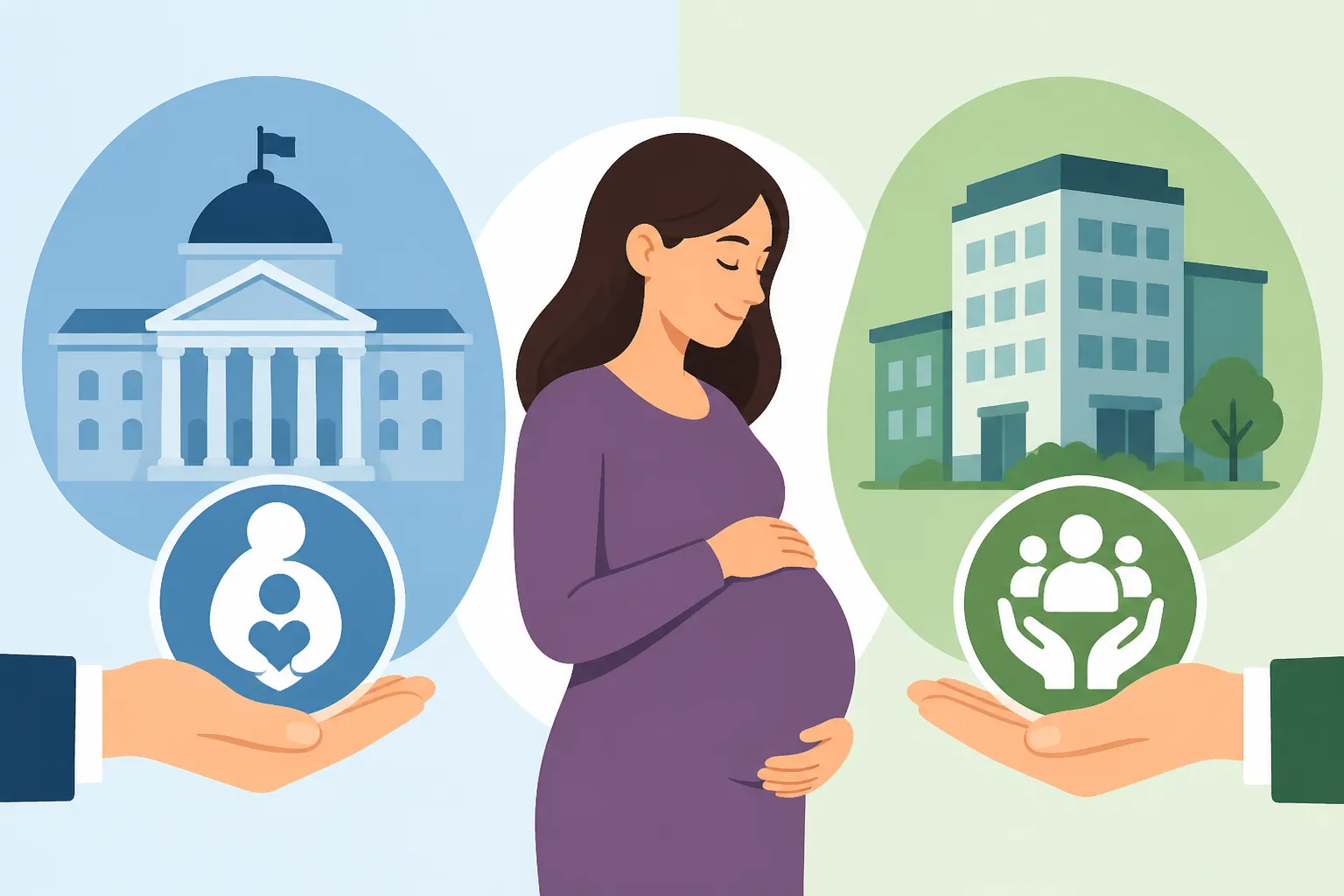
Maternity Pay from Udbetaling Danmark vs. Employer Top-ups
It's no secret that becoming a parent in a new country brings a whirlwind of emotions – excitement, joy, and often, a hefty dose of administrative confusion. One of the biggest question marks for many expat parents-to-be in Denmark is undoubtedly maternity pay: where does it come from, how much will you get, and what’s the difference between Udbetaling Danmark and what your employer might offer? This guide is here to untangle that knot for you, breaking down the Danish system so you can focus on preparing for your little one.
Deciphering Danish Maternity Leave: Barselsdagpenge from Udbetaling Danmark
Let's cut right to it: the Danish system for parental benefits, known as barselsdagpenge, can feel like a labyrinth, especially when you're trying to navigate it in a second language and with pregnancy brain. At its core, the public system is designed to provide financial support during your leave, but it's crucial to understand where that support originates.
What is Barselsdagpenge and Who Pays It?
Barselsdagpenge literally translates to "maternity daily allowance," but it encompasses payments for both mothers, fathers, and co-parents during parental leave. The primary payer for these benefits is a governmental agency called Udbetaling Danmark (Payments Denmark). Think of them as the central hub for most social benefits in Denmark, including child benefits, pensions, and, yes, parental leave pay. They ensure that eligible individuals receive a baseline income when they take time off work to care for a newborn.
This system is part of Denmark's robust social welfare model, aiming to provide financial security during a period when families need it most. It's not a direct salary continuation, but rather a benefit calculated based on your previous work and income. The goal is to replace a portion of your lost earnings, allowing you to bond with your child without undue financial stress. However, it's vital to note that Udbetaling Danmark's payments have a maximum weekly limit, which for many expats on higher salaries, won't match their full income. This is where employer top-ups become incredibly significant, which we'll delve into shortly.
Eligibility Requirements for Udbetaling Danmark Benefits
Qualifying for barselsdagpenge isn't automatic; you need to meet specific criteria. For most employed expats, the main requirements revolve around your employment history and residency status. Generally, to be eligible, you must have been employed for at least 13 weeks within the last 12 months before your leave, and have worked a minimum of 160 hours during that period. It’s important to clarify that this isn't just about being employed, but about having a continuous and recent attachment to the Danish labor market.
Your residency status is also paramount. You need to be a legal resident in Denmark with a valid CPR number, and usually, be subject to Danish social security rules. If you’re an EU/EEA citizen, your previous work history in another EU/EEA country might be taken into account, but for non-EU citizens, the focus is squarely on your employment and contributions within Denmark. If you're a recent arrival, especially without a solid work history here, you might find the initial qualification challenging. Always remember, securing your Maternity and Paternity Leave (Barsel) Entitlements in Denmark starts with understanding these foundational requirements.
The application process itself typically begins with your employer reporting your leave to Udbetaling Danmark through a digital system called NemRefusion. From there, you'll receive a digital letter in your E-boks or Mit.dk inbox, prompting you to apply directly. It's a system that relies heavily on digital communication, so making sure your NemKonto and MitID: The Core of Danish Digital Finance (2027) are fully set up and functional is non-negotiable.
The Crucial Role of Employer Top-ups in Your Maternity Pay
Now, let's talk about the game-changer for many expat families: the employer top-up. While Udbetaling Danmark provides a baseline, it rarely covers 100% of your salary, especially if you're earning above the national average. This gap can be a significant concern for families accustomed to a particular lifestyle, and that's where enlightened employers step in.
Going Beyond the Basics: What Employer Top-ups Mean
An employer top-up simply means that your company pays the difference between the barselsdagpenge you receive from Udbetaling Danmark and your usual salary. This ensures that you continue to receive your full, or very nearly full, monthly income while you're on parental leave. For many, this is the difference between scraping by on reduced income and maintaining financial stability during an already expensive time of life.
These top-ups are not legally mandated by Danish law for all employers, which is a crucial point many expats miss. Instead, they typically stem from collective agreements (overenskomster) negotiated by trade unions or from individual company policies and employment contracts. This makes joining a trade union, or at the very least, thoroughly reviewing your employment contract, incredibly important. Without an employer top-up, you would only receive the maximum barselsdagpenge rate, which can be substantially lower than your regular salary. This is a common point of contention and frustration for foreigners who might not be aware of this distinction until it's too late.
It’s worth mentioning here that even with top-ups, your total income during leave will still be subject to standard Danish taxes. For insights into how this income fits into your overall financial picture, understanding Taxes in Denmark Explained: A-Skat, AM-bidrag, and Marginal Rates is essential, as even during parental leave, the system ensures your contributions to society continue.
Collective Agreements and Individual Contracts: Your Best Friends
So, how do you ensure you get these valuable top-ups? Your best bet is usually a collective agreement. Denmark has a strong tradition of collective bargaining, where trade unions negotiate terms and conditions with employer organizations. These agreements often include provisions for full salary during part or all of parental leave. If your workplace is covered by an overenskomst, you are likely entitled to these benefits. This is why many expats find immense value in joining a trade union; they often secure much better parental leave conditions than the statutory minimum. Knowing your Employment Rights: Contracts, Holiday Law, and Maternity Leave is a cornerstone here.
If your workplace isn't covered by a collective agreement, then your entitlement to a salary top-up depends entirely on your individual employment contract. This is where the initial negotiation phase for your job becomes absolutely critical. Did you ask about parental leave benefits? Is it explicitly stated in your contract that your employer will top up your pay during leave? If not, you might find yourself only receiving the Udbetaling Danmark rate. Don’t be afraid to clarify these terms with your HR department or manager well in advance of your leave. Learning some Danish phrases might even help, and platforms like iTalki could give you the confidence to discuss such important matters. Being proactive and understanding the specifics of your agreement can save you significant financial worry down the line.
Navigating the Application Process and Financial Calculations
Once you understand the 'what' and 'who' of maternity pay, the next step is the 'how much' and 'how to get it.' The Danish system is highly digitized, which can be both a blessing and a curse for expats.
Step-by-Step: Applying for Your Parental Benefits
The application process for barselsdagpenge primarily involves two parties: your employer and yourself, communicating with Udbetaling Danmark. Here's a general overview of how it usually unfolds:
- Notify Your Employer: You are legally required to inform your employer about your pregnancy and your intention to take maternity leave well in advance. For mothers, this is typically at least 3 months before your due date. For fathers/co-parents, it's usually 4 weeks before the expected start of their leave. This formal notification is crucial for your employer to plan and initiate the necessary paperwork.
- Employer Reports to Udbetaling Danmark: Once you've notified them, your employer is responsible for reporting your leave dates and your last working day to Udbetaling Danmark through the NemRefusion portal. This is a digital system used by employers to report sickness and parental leave data.
- Receive Your Digital Letter (Høringsbrev): After your employer reports, Udbetaling Danmark will send you a digital letter (a høringsbrev) to your E-boks or Mit.dk. This letter is your cue to act! It will contain information about your reported leave and a link or instructions on how to apply for your barselsdagpenge.
- Submit Your Application: You must then log in to Borger.dk (using your MitID) and complete the digital application form. This form will ask for details about your employment, income, and the periods you wish to receive benefits. It's essential to complete this step promptly and within the stated deadlines, usually within 8 weeks after the first day of your leave. Missing deadlines can lead to a reduction or loss of benefits.
- Confirmation and Payments: Once Udbetaling Danmark processes your application, you will receive confirmation of your entitlement and payment schedule. Payments are typically made monthly to your NemKonto.
Remember that staying on top of your digital mail and communicating openly with your HR department is key. You might also find yourself needing to request a How to Request a Lægeerklæring (Doctor’s Note) for Your Employer if your leave starts early due to pregnancy complications, further highlighting the interconnectedness of the Danish systems.
Understanding How Your Barselsdagpenge is Calculated
The calculation of barselsdagpenge from Udbetaling Danmark isn't based on your full monthly salary, but rather on your average weekly working hours and hourly wage, with a strict maximum limit. For 2026, there is a maximum weekly rate (maksimum barselsdagpengesats) that Udbetaling Danmark will pay out. This figure is adjusted annually, so it's always good to check the most current rate on Borger.dk or Udbetaling Danmark's website.
Generally, for employed individuals, barselsdagpenge is calculated based on the income that would have been paid to you during your absence. This often means your average hourly wage over the last three months, multiplied by your usual working hours, up to the maximum weekly rate. For self-employed individuals, the calculation is often based on your most recent profit or average income. It's a system designed to be fair but can feel complex due to the maximum cap.
This is precisely where employer top-ups become so critical. If your agreed-upon salary is, for example, 35,000 DKK per month, but the Udbetaling Danmark maximum weekly rate only translates to around 28,000 DKK per month, your employer top-up would cover that 7,000 DKK difference (before tax). Without it, that 7,000 DKK difference would simply be lost income for you during your leave. Keep in mind that both barselsdagpenge and any employer top-ups are considered taxable income, so your actual take-home pay will reflect this. Diving into the intricacies of your Understanding Your Danish Payslip (Lønseddel): Deductions Decoded can shed more light on these deductions.
Here’s a quick overview to highlight the differences:
| Feature | Udbetaling Danmark (Barselsdagpenge) | Employer Top-up |
|---|---|---|
| Payer | Public (Udbetaling Danmark) | Private (Your Employer) |
| Legally Mandated | Yes, for eligible individuals (up to max rate) | No, depends on contract/collective agreement |
| Calculation Basis | Average weekly income/hours, up to a maximum weekly rate | Difference between your full salary and barselsdagpenge |
| Purpose | Basic income replacement during parental leave | To ensure full or near-full salary during leave |
| Eligibility | Work history, residency, application via Borger.dk | Your employment contract or collective agreement (overenskomst) |
| Tax Implications | Taxable income (A-income) | Taxable income (A-income) |
| Expat Consideration | Crucial baseline, but often not enough for higher earners | Highly desirable, significantly impacts financial stability |
Practical Tips and Important Considerations for Expat Parents
As an expat, you're not just navigating a new chapter of parenthood; you're doing it within a new bureaucratic landscape. Here's some seasoned advice to help you through.
Language, Bureaucracy, and Seeking Help
Let's be honest: the Danish administrative system, while efficient, can be a beast if your Danish isn't fluent. Many of the crucial forms, digital portals like NemRefusion, and official communications from Udbetaling Danmark are primarily in Danish. This can lead to misunderstandings, missed deadlines, and a lot of unnecessary stress. Don't be too proud to ask for help! Your HR department should ideally be able to guide you, but if they're not fully expat-savvy, seek out resources.
Consider asking a Danish-speaking friend or colleague to sit with you when you're going through official documents, or even when making a phone call to Udbetaling Danmark. Some municipalities offer guidance for new parents, and there are often expat groups online where people share experiences and tips. If you're serious about integrating and making these processes easier, investing in Danish language lessons, perhaps through a platform like iTalki, can make a huge difference in your confidence when dealing with official bodies. Remember that the Danish system values direct communication, even if it feels a bit blunt at times, as discussed in Danish Work Culture: Flat Hierarchies, Hygge, and Direct Communication. Don't be afraid to be direct in your questions and ask for clarification until you fully understand.
Beyond Maternity: Paternity and Parental Leave Flexibility
While we've focused heavily on maternity pay, it's vital to remember that Denmark has one of the most generous and flexible parental leave systems in the world, with substantial provisions for fathers and co-parents. The total barselsdagpenge entitlement is 52 weeks (4 weeks before birth for the mother, 14 weeks maternity, 2 weeks paternity, and 32 weeks parental leave to be shared). This means that after the initial weeks, the remaining leave can be shared between parents, or even taken flexibly over a longer period.
Both parents typically have the right to 2 weeks of paternity/co-parental leave immediately after birth or arrival, also usually covered by barselsdagpenge and potentially employer top-ups. The remaining 32 weeks of parental leave can be allocated very flexibly. Some employers offer more extensive benefits for fathers or co-parents as well, so always check your contract or collective agreement. The system encourages both parents to participate actively in raising their children, and understanding these options is key to planning your family's first year. It's a huge benefit of living in Denmark, so make sure you claim your full Maternity and Paternity Leave (Barsel) Entitlements in Denmark.
Disclaimer
Please remember that while this guide aims to be comprehensive and up-to-date for 2026, rules and regulations around parental leave and benefits in Denmark can change. This information is for general guidance only and does not constitute legal or financial advice. Always consult official sources like Udbetaling Danmark, Borger.dk, or a legal professional for your specific situation.