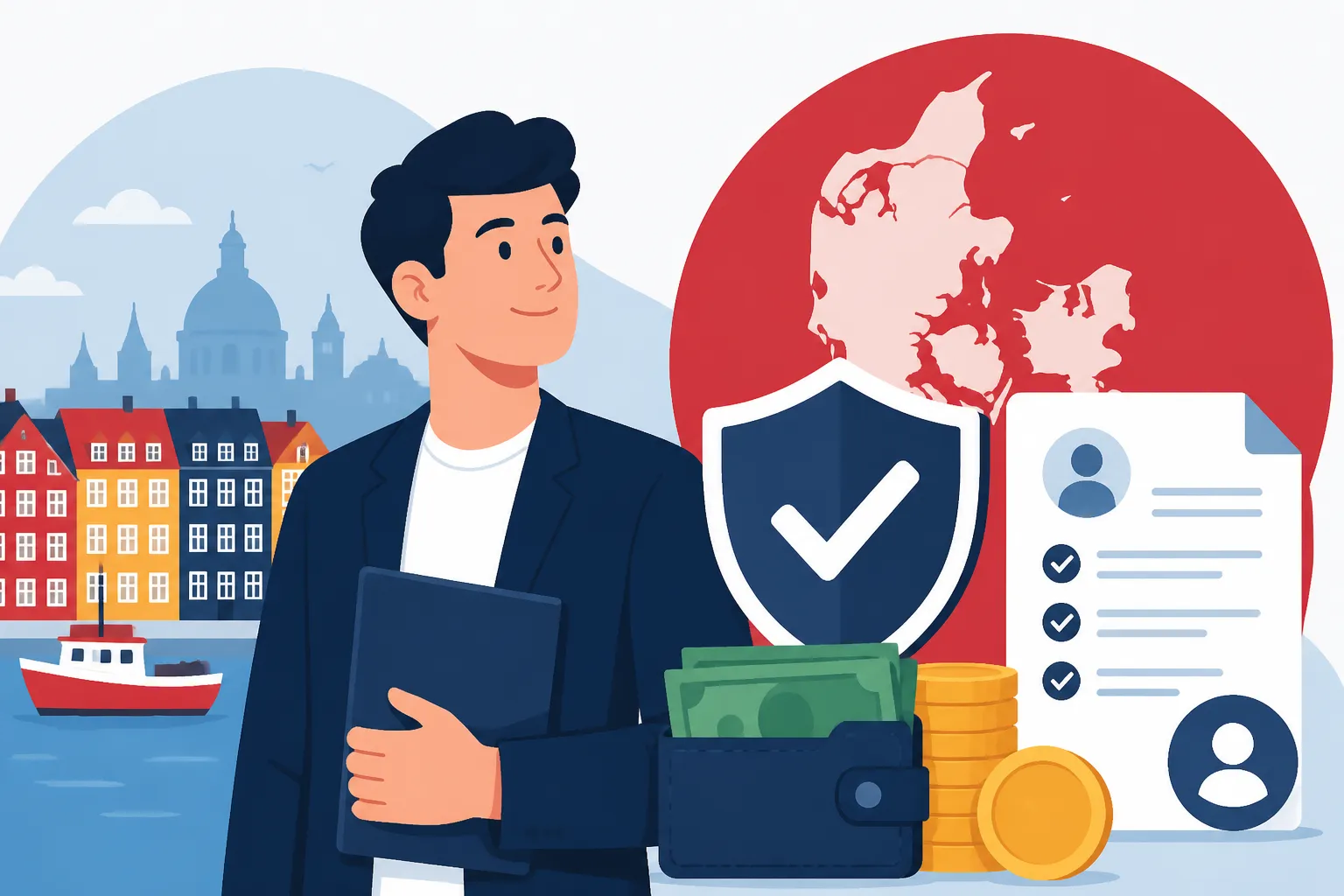
Proving Financial Solvency for the Danish Startup Visa Program
So, you've got that brilliant startup idea bubbling, and Denmark's reputation for innovation and work-life balance has you dreaming of launching your venture here. It's an exciting prospect, but let's be real: moving to a new country and starting a business involves a lot of financial proof, especially for the Danish Startup Visa Program. This guide will walk you through exactly what 'financial solvency' means in Denmark, detailing the specific amounts and the precise documentation you'll need to convincingly demonstrate it to the authorities.
The Foundation: Why Financial Solvency is Key to Your Danish Startup Visa
Landing a Danish Startup Visa isn't just about having a groundbreaking business idea or a solid business plan; it's equally about demonstrating that you can actually support yourself (and your family, if they're coming along) without becoming a burden on the Danish welfare system. This isn't unique to Denmark, of course, but the Danish authorities, particularly the Agency for International Recruitment and Integration (SIRI), are incredibly meticulous about this aspect of your application. They want to see tangible proof that you have enough funds to cover your living expenses for at least one year.
Imagine arriving in Denmark, ready to hustle and bring your innovative concept to life, only to find yourself struggling to pay rent or buy groceries. The Danish government's goal with this solvency requirement is to prevent exactly that scenario. They’re investing in promising entrepreneurs, but with the expectation that these individuals are self-sufficient during the critical startup phase. This approach ensures that you can focus on making your business a success rather than worrying about basic necessities. It’s part of a broader, pragmatic mindset that underpins many aspects of life in Denmark. It might feel like a hurdle, but it's a protective measure for both you and the system.
Furthermore, the financial solvency requirement goes hand-in-hand with the assessment of your business idea by the Danish Business Authority's Business Panel. While the panel evaluates the viability and potential of your startup, SIRI cross-references this with your personal financial capacity. A brilliant idea won't get off the ground if you can't afford to live while developing it. This dual assessment ensures that successful applicants are not only bringing innovation but also stability. It shows them you've thought through the whole picture, not just the dream.
Quantifying Your Funds: How Much Money Do You Really Need?
When it comes to the Danish Startup Visa, "financial solvency" isn't some vague concept; it's a very specific, annually adjusted monetary figure. These amounts are set by the Danish government to reflect the estimated minimum cost of living in Denmark for a year, which, let's be honest, can be quite high compared to many other countries. As an expat, you'll quickly realize that while the quality of life is fantastic, it comes with a price tag.
For the year 2024, a single applicant for the Danish Startup Visa needs to demonstrate access to funds amounting to DKK 143,184 to cover their living expenses for twelve months. This is the baseline. If you're planning to bring your spouse or registered partner with you, the requirement increases significantly. You'll need an additional DKK 23,868 for your partner. And if you have children who will accompany you to Denmark, you'll need to add another DKK 11,934 for each child. These numbers are updated yearly, so it's always crucial to check the official SIRI website for the most current figures before submitting your application. Remember, these are minimums, and having a bit extra always provides a greater buffer and peace of mind when settling into a new country. It also demonstrates an even stronger commitment to your venture and your ability to weather unexpected expenses.
It's also important to understand what kind of funds are acceptable. The authorities are looking for liquid assets – money that is readily accessible and not tied up in long-term investments that can't be quickly converted to cash. This typically means funds held in your personal bank accounts, such as checking or savings accounts. They aren't interested in the value of your property back home, your retirement fund, or shares in a company unless these can be swiftly liquidated and the cash transferred to your account. The primary goal is to ensure you have immediate access to funds to support yourself from day one. Any significant, recent large deposits might also raise questions and require further explanation regarding their source, so transparency and a clear financial history are paramount.
| Applicant Type | Required Funds (DKK, as of 2024) |
|---|---|
| Single Applicant | 143,184 |
| Accompanying Spouse/Partner | Additional 23,868 |
| Each Accompanying Child | Additional 11,934 |
| Example: Applicant + Spouse + 1 Child | 178,986 |
Note: These figures are subject to annual adjustment by SIRI. Always check the official website for the most current requirements.
Assembling Your Proof: Essential Documentation for SIRI
Once you understand the required amounts, the next critical step is to gather the documentation that will prove your financial solvency to SIRI. This isn't a casual affair; the Danish authorities expect clear, official, and well-organized evidence. Think of it as building a strong legal case for your financial stability.
The most common and preferred method of proving your funds is through bank statements. These need to be comprehensive, showing transactions over a recent period, typically the last 3-6 months. The statements should clearly indicate your name as the account holder, the bank's name, the account number, and, most importantly, the current balance. It’s not enough to just show the final balance; SIRI wants to see consistent activity and a stable financial footing, rather than a sudden, large deposit just before you apply. If there was a large, recent deposit, be prepared to provide a clear explanation and supporting documentation for its source – for instance, proof of sale of property, inheritance documents, or a legitimate loan agreement.
Crucially, any documents that are not in English, Danish, Norwegian, or Swedish must be translated by an authorized translator. This isn't a suggestion; it's a strict requirement. Don't try to save a few kroner by doing a Google Translate job yourself, because it simply won't be accepted. You'll need professional translation services, and this is where companies like RushTranslate or Translayte come into play. They specialize in official translations and can provide the certified documents that SIRI requires. Ensure that the translation is clear, accurate, and accompanied by the original document. It might seem like an extra step, but it’s vital for the credibility of your application.
Beyond bank statements, you might also consider including an official letter from your bank, on letterhead, confirming your account balance and that the funds are readily available to you. This adds an extra layer of authenticity. If your funds are held in multiple accounts or different currencies, you'll need to provide statements for all of them and clearly indicate the total sum in Danish Kroner (DKK), using a recent, verifiable exchange rate. The clearer and more straightforward your financial picture, the easier it will be for SIRI to process your application without delays. Remember, SIRI works with a highly standardized process, so any deviation or ambiguity will likely lead to requests for further information, delaying your journey to Denmark. For more general advice on navigating the Danish bureaucracy, you might find guides like SIRI: Processing Times, Biometrics, and Appeals helpful.
Avoiding Pitfalls: Common Challenges and Expert Tips for Success
Navigating the financial requirements for the Danish Startup Visa can feel like walking through a minefield, but with a bit of foresight and careful preparation, you can avoid common missteps. Many expats have faced delays or even rejections simply due to easily avoidable errors in their financial documentation.
One of the biggest pitfalls is presenting funds that are not considered liquid and immediately accessible. We've seen applicants submit proof of property ownership in their home country, expecting it to count, only to have their application stalled. While real estate holds value, it's not cash in hand. SIRI needs to be convinced that if you land in Denmark tomorrow, you can immediately access the necessary funds for rent, food, and initial business expenses. Another common issue is sudden, unexplained large deposits in your bank account right before applying. This raises red flags, as it could be perceived as borrowing money just to meet the requirement, with no intention of using it for living expenses. Always maintain a transparent and consistent financial history. If you do receive a large sum, make sure you have official documentation – like a gift deed, a property sale agreement, or a loan document – explaining the source of funds.
Furthermore, make sure all your documents are dated correctly and consistently. An outdated bank statement or a letter from a bank with an ambiguous date can lead to questions. It’s best to provide statements that are no older than a month at the time of your application submission. And as mentioned, the language barrier is real. If your bank statements are in, say, Arabic or Chinese, getting them officially translated into English or Danish is non-negotiable. Don't assume the case worker will understand your native language. Investing in professional translation from services like RushTranslate or Translayte is a small cost compared to the hassle of a rejected application. You'd be surprised how often simple administrative oversights trip up otherwise strong applications. For general guidance on setting up your finances in Denmark, check out Money in Denmark: Banking, Payments, and Financial Setup for Expats as soon as you can.
Lastly, be prepared to show evidence of regular income or savings over a period, not just a snapshot of a high balance on one day. This demonstrates sustained financial capability. For example, if you're coming from a full-time job and have accumulated savings, showing your salary statements alongside bank statements for the past six months provides a much stronger picture than just a single bank statement. The more comprehensive and continuous your financial narrative, the better. And don't forget, if you are planning to bring family, clearly demonstrate that you meet the combined financial requirement. Missing funds for even one child can be a deal-breaker. Understanding the full scope of Danish visa and residence permits, as detailed in Danish Visas and Residence Permits: The Complete Expat Guide (2027), can also provide broader context for these specific financial stipulations. Even once you have your visa, remember that opening a Danish bank account can take time, so having your funds readily accessible in an international account that you control is paramount in the interim, as discussed in Opening a Bank Account in Denmark: Document Checklist and Delays.
Disclaimer
The information provided in this guide is intended for general informational purposes only and does not constitute legal or financial advice. Immigration regulations and financial requirements for the Danish Startup Visa Program are subject to change by the Danish authorities (SIRI and the Danish Agency for International Recruitment and Integration) without prior notice. Always consult the official SIRI website or a qualified immigration lawyer or financial advisor for the most up-to-date and personalized guidance regarding your specific situation.