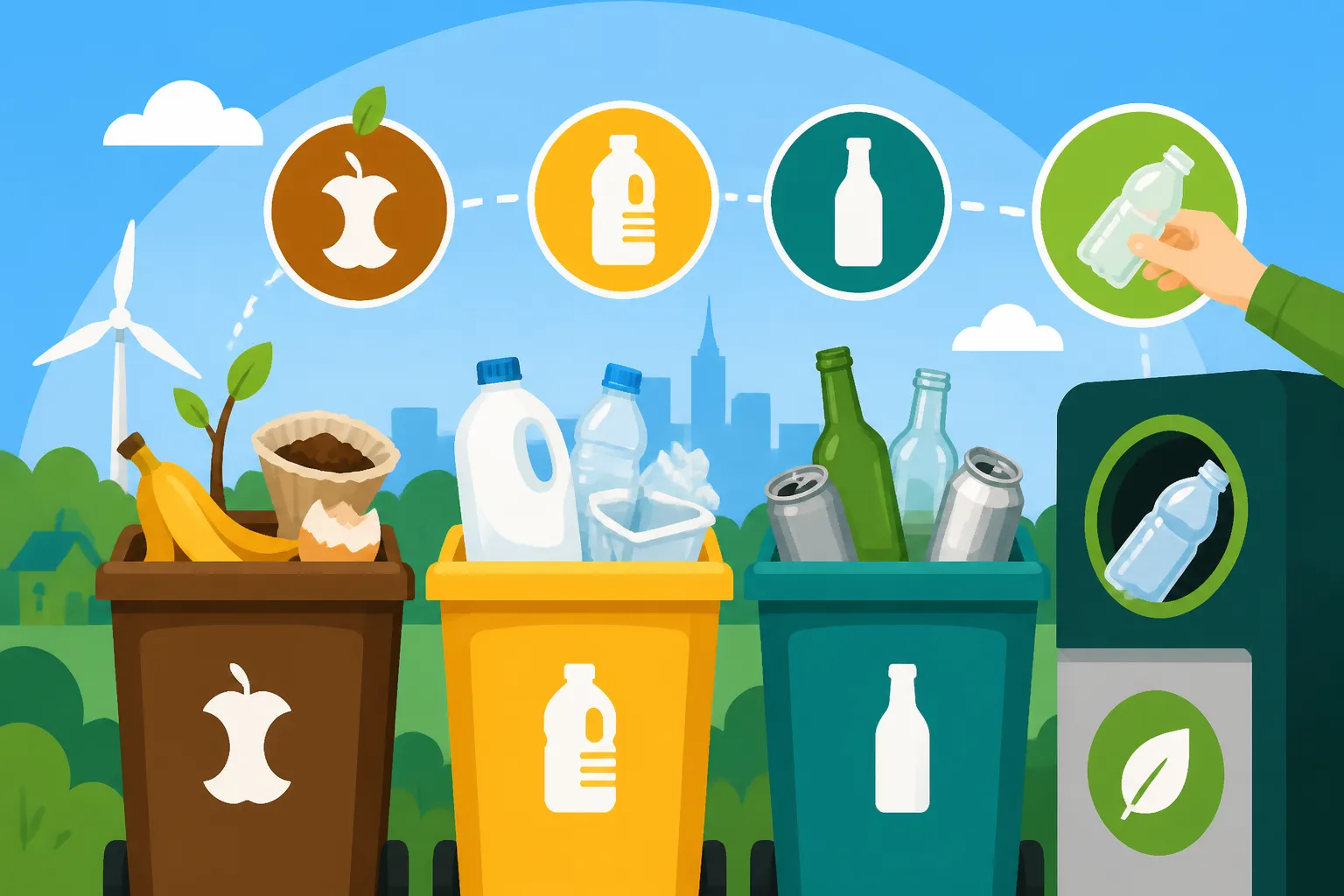
Garbage Sorting in Denmark: Bio-waste, Plastic, and Pant Systems
When you first arrive in Denmark, the sheer meticulousness of daily life can be a delightful cultural quirk – until you face your garbage bins. Suddenly, that simple act of throwing something away becomes a labyrinthine challenge, leaving many of us standing confused with a banana peel in one hand and a yogurt container in the other, wondering which of the seven color-coded compartments is the correct destination. This guide is here to untangle the Danish garbage sorting system, offering practical, expat-friendly advice so you can conquer your waste with confidence and avoid those dreaded "wrong bin" anxieties.
The Danish Approach to Waste: Why It's So Different
Let's be real, for many of us coming from other countries, recycling often meant two bins: general waste and "stuff that might be recycled." Maybe a third for glass if you were lucky. In Denmark, however, waste management is a deeply ingrained societal value, not just a suggestion. It's an integral part of their commitment to sustainability and the circular economy. This isn't just about saving the planet (though that's a huge part of it); it's about resource efficiency and reducing incineration, and it's something every resident is expected to participate in actively.
When you first move into your new Danish home, whether it's an apartment found through platforms like Spotahome or a house in the suburbs, one of the immediate practicalities you’ll face, beyond getting your utilities set up, is understanding the local waste system. It's often one of those "hidden" administrative hurdles that only become apparent when you have a full bag of trash and no idea where it goes. The system here is designed to extract maximum value from everything we discard, turning food waste into biogas and plastic into new products. This hyper-local, detailed sorting might feel like an extra chore initially, but once you get the hang of it, it becomes second nature, a small daily contribution to a larger, greener vision.
More Than Just Recycling, It's a Lifestyle
It's tempting to think of Danish waste sorting as simply "recycling," but that really undersells the philosophy behind it. Danes view waste as a resource, something with inherent value that can be transformed rather than just discarded. This perspective is woven into the fabric of daily life, from the design of kitchen sorting solutions to public awareness campaigns. You'll quickly notice that most Danish kitchens, even smaller ones, are designed to accommodate multiple small bins or compartments for different waste types. It’s a subtle but constant reminder that sorting isn't an optional extra; it's a fundamental part of living here.
This commitment extends beyond individual households to municipalities, businesses, and public spaces. The goal is to minimize residual waste – the stuff that really has no other purpose than to be incinerated for energy (which is also highly efficient here, but that's a story for another time). So, when you're meticulously washing out a milk carton or separating a bottle cap from a plastic bottle, remember you're not just doing a chore; you're participating in a collective effort to keep valuable materials in circulation and out of landfills (which Denmark practically doesn't have, by the way!). It's a small but significant way to integrate into Danish society and understand its core values.
Municipal Rules and Local Variations
Here's where it can get a little tricky for us expats: while the general principles of sorting are consistent across Denmark, the exact categories and the collection systems can vary slightly from one municipality to another. This means what goes into the "plastic" bin in Copenhagen might have a slightly different instruction than in Aarhus or Odense. Don't worry, it's usually minor differences, but it’s crucial to be aware of your specific municipality's guidelines.
Your local kommune (municipality) is your primary source of information. They typically provide detailed guides, often in multiple languages, on their website or as a physical booklet when you register your address. Many municipalities also have dedicated apps where you can find sorting guides, collection schedules, and even get reminders for when to put out your bins. If you’re just settling in, ensuring your phone is connected with a reliable eSIM from a provider like Airalo can be invaluable for accessing these online resources and municipal apps. Ignoring these local variations can lead to your bins not being emptied, or worse, fines for incorrect sorting, so it's worth taking the time to understand your specific local rules.
Decoding the Different Bins: A Category-by-Category Guide
Alright, let's get down to brass tacks. You've got your kitchen full of various bits and bobs, and a set of bins staring back at you. What goes where? While specific colors or labels might vary by municipality, the categories are generally the same. Here’s a breakdown of the most common waste types you'll encounter and how to sort them.
Food Waste (Bioaffald): The Green Bin Revolution
This is often one of the first and most noticeable changes for new arrivals. Food waste, or bioaffald, is typically collected in a separate, usually green, bin. You'll likely be provided with special compostable bags (often made from cornstarch) by your municipality, which you then put your food scraps into before placing them in the larger bin. The idea is that this organic material will be transformed into valuable biogas and nutrient-rich fertilizer.
Think about all your kitchen scraps: vegetable and fruit peels, leftover cooked food, coffee grounds, tea bags, old bread, meat, fish, and bones. All of this goes into the bioaffald. What doesn't go in? Anything that isn't organic food waste. That means no plastic bags (unless they're the special compostable ones), no aluminum foil, no cat litter, no diapers, and definitely no chemicals. It's a closed loop for organic matter. Making sure your food waste is correctly separated not only supports Denmark’s green agenda but also helps keep your residual waste bin from getting too smelly, which is a nice bonus during the warmer months.
Plastic, Metal, and Drink Cartons: Clean and Dry is Key
This is where many people get tripped up. Most municipalities will have a combined bin for plastic, metal, and drink cartons (like milk and juice cartons). The crucial rule here is: they must be clean and dry. A quick rinse to remove food residue is usually sufficient. You don't need to scrub them sparkling clean, but they shouldn't be dripping with yogurt or smelling strongly of old fish.
- Plastic: This includes all sorts of plastic packaging – yogurt pots, butter tubs, shampoo bottles, plastic bags (clean ones), cling film, plastic trays from meat. The general rule is: if it's plastic packaging, it goes here. Hard plastic items that aren't packaging (like a broken toy or a laundry basket) might go to the recycling center (genbrugsstation) or storskrald (bulky waste) depending on your municipality.
- Metal: This category includes aluminum cans (not part of the pant system, more on that later), tin cans from food (like canned tomatoes or tuna), aluminum foil, and small metal items like bottle caps. Again, a quick rinse for food containers.
- Drink Cartons: These are the multi-layered cartons for milk, juice, soup, etc. They are a combination of paper, plastic, and sometimes aluminum, which requires specialized recycling. Just give them a quick rinse and flatten them if possible to save space.
Remembering "clean and dry" is the golden rule for this mixed bin. Contaminated items can spoil an entire batch of recyclables, rendering them unusable and sending them straight to incineration, which defeats the purpose.
Paper and Cardboard: Separating the Fibers
This category is fairly straightforward but still has its nuances. You'll typically have separate bins for paper and cardboard. Sometimes these are combined, but often they are kept apart because the fibers are different and processed differently.
- Paper: This includes newspapers, magazines, advertising flyers, envelopes (windows are generally fine), office paper, and non-shiny paper bags. It should be clean and dry. No greasy pizza boxes here, please!
- Cardboard: This is for larger, thicker cardboard, like delivery boxes, cereal boxes, shoe boxes, and egg cartons. Again, ensure it's clean and flattened to save space in the bin. If a cardboard box is heavily soiled with food (like a greasy takeaway box), it often belongs in residual waste, as the contamination makes recycling difficult.
The key distinction is usually based on thickness and quality. Don't throw plastic-coated paper (like some coffee cups or freezer packaging) into the paper bin; these typically belong with residual waste or combined plastic/metal. These small details ensure the paper fibers can be properly reprocessed into new paper products.
Glass: Bottles and Jars Only
The glass sorting is usually quite clear: glass bottles and jars. Wine bottles, jam jars, olive oil bottles, soda bottles (those not covered by the pant system) – all go here. The main rule is to remove lids and caps (sort them separately, usually with plastic/metal or residual) and give the glass a quick rinse.
What definitely doesn't go in the glass bin? Drinking glasses (different type of glass, often with lead), ceramics (mugs, plates), porcelain, mirror glass, or window glass. These items have different melting points and chemical compositions and will contaminate the batch if mixed with packaging glass. These usually need to go to your local genbrugsstation or possibly storskrald. It’s a common mistake, but an important one to avoid to ensure proper glass recycling.
Restaffald (Residual Waste): The Last Resort
Finally, we have restaffald, or residual waste. This is your "last resort" bin – for everything that cannot be sorted into any of the other categories. If you're sorting correctly, this bin should be significantly smaller and fill up much slower than you might be used to.
Typical items for residual waste include: diapers, sanitary products, cat litter, ash from fireplaces (cooled!), vacuum cleaner bags, cigarette butts, heavily soiled food packaging that can't be rinsed, small broken items that aren't electronic or hazardous, and anything else that genuinely doesn't fit elsewhere. The goal of the Danish system is to minimize what ends up here, as this is the waste that is usually incinerated to produce heat and electricity, rather than recycled into new materials.
| Waste Category | Bin Color (Typical) | Common Items | Exclusions / Where Else It Goes | Key Rule |
|---|---|---|---|---|
| Bioaffald (Food Waste) | Green | Fruit/veg peels, cooked food, coffee grounds, meat/fish | Plastics, liquids, cat litter, diapers | Use compostable bags provided |
| Plastic/Metal/Cartons | Blue/Grey | Yogurt pots, butter tubs, tin cans, foil, milk cartons | Hard plastic items (toys), contaminated packaging | Clean and Dry |
| Papir (Paper) | Blue | Newspapers, magazines, office paper, envelopes | Greasy paper, plastic-coated paper | Dry and clean |
| Pap (Cardboard) | Orange/Brown | Delivery boxes, cereal boxes, egg cartons | Soiled cardboard (pizza boxes), plastic-coated | Flattened, dry, and clean |
| Glas (Glass) | White/Clear | Glass bottles, jam jars, olive oil bottles | Drinking glasses, ceramics, mirrors, window glass | Lids/caps removed, rinsed |
| Restaffald (Residual) | Grey/Black | Diapers, sanitary products, ash, vacuum bags, pet waste | Anything that can be sorted elsewhere | The last resort bin |
The Pant System: Your Money Back for Bottles and Cans
This is a fantastic system that directly rewards you for recycling certain types of drink containers, and it's something every expat should get acquainted with early on. The Pant system is Denmark's deposit-return scheme for most beverage bottles and cans, designed to ensure a very high return rate for these easily recyclable items. You pay a small deposit (the "pant") when you buy a drink, and you get that money back when you return the empty container. It's brilliant!
This system is not just about convenience; it's a huge driver for environmental responsibility. It ensures that valuable aluminum and plastic from beverage containers are collected and recycled at an incredibly high rate, reducing litter and conserving resources. You'll find pant machines (called pantautomater) in virtually every supermarket across the country. It's also a surprisingly satisfying little ritual, turning your empties into a small bit of cash for your next grocery run.
Understanding the 'Pant' Labels
When you're buying drinks, keep an eye out for the distinct Pant labels on bottles and cans. There are three main categories, each indicating a different deposit amount:
- Pant A (1 krone): This is typically for smaller plastic bottles and cans (e.g., small soda cans, juice bottles).
- Pant B (1.50 kroner): This usually applies to larger plastic bottles and some glass bottles (e.g., larger soda bottles).
- Pant C (3 kroner): This is for the largest plastic bottles (e.g., 1.5-liter or 2-liter soda bottles).
The deposit amount is clearly printed on the label, often right next to the symbol. Make sure the labels and barcodes on your bottles and cans are intact and readable; otherwise, the pantautomat might not recognize them, and you won't get your deposit back. Don't crush the cans or bottles too much, either, as some machines rely on their shape for identification. Knowing these labels will save you money and ensure you're participating correctly in one of Denmark's most effective recycling initiatives.
Where to Return Your Bottles and Cans
Returning your pant containers is incredibly easy. As mentioned, nearly all supermarkets – Netto, Rema 1000, Føtex, Meny, etc. – have pantautomater. You simply feed your empty, uncrushed bottles and cans into the machine. Once you're done, the machine will print a receipt (a pantbon) with the total value of your returned items.
You can then take this receipt to the cashier and either get the cash back or apply it as a discount to your current grocery purchase. Many expats initially feel a bit awkward doing this, especially getting cash back, but trust me, it's completely normal and expected. Danes of all ages and income levels use the pant system religiously. It’s a common sight to see people, from students to families, carrying bags of empties to the supermarket. It’s a small but tangible way the system encourages sustainable behavior by making it financially beneficial. So embrace the pant system – it’s a win-win for your wallet and the environment!
Beyond the Bins: Special Waste and Community Recycling Points
While the multi-compartment bins handle most of your day-to-day waste, there are always those "special" items that don't fit neatly into any category. For these, Denmark has robust systems in place, primarily through its network of genbrugsstationer (recycling centers) and dedicated collection points. Ignoring these facilities is a surefire way to accumulate unwanted items in your apartment or, worse, dispose of them incorrectly and incur fines.
Learning about these specialized waste streams is an important part of settling into life here. It reflects the Danish commitment to comprehensive waste management, ensuring that even the trickiest items are processed responsibly. Don't be shy about asking your neighbors or local municipality if you're unsure about where a particular item goes – it's far better to ask than to guess wrong.
Hazardous Waste Farligt Affald and Electronics Elektronikaffald
Certain types of waste pose risks to the environment or human health and require special handling. This is where farligt affald (hazardous waste) and elektronikaffald (electronic waste) come in. You absolutely cannot throw these into your regular residual waste bin.
- Farligt Affald: This includes things like paint, solvents, chemicals, batteries, fluorescent light bulbs, energy-saving light bulbs, spray cans, and certain types of cleaning products. Your municipality will have designated collection points or services for these. Often, the genbrugsstation will have a separate section for hazardous waste. Some municipalities even have "miljøbiler" (environment cars) that periodically drive through neighborhoods to collect these items. Always check your local kommune's website for specifics.
- Elektronikaffald: Anything with a plug or a battery, from old cell phones and laptops to toasters and lamps, falls under electronic waste. These items contain valuable materials that can be recovered, as well as hazardous substances that need proper disposal. Like hazardous waste, electronics typically go to a genbrugsstation. Many electronics retailers also offer take-back schemes for old devices when you purchase new ones.
Proper disposal of these items is not just a recommendation; it's a legal requirement to protect both the environment and public health. Taking the extra step ensures that these materials are either safely neutralized or recycled for their valuable components.
Textiles and Large Items Storskrald
What about that old sofa, a broken mirror, or a pile of clothes you no longer need? These fall under storskrald (bulky waste) or specialized textile collection.
- Storskrald: For large, bulky items like furniture, mattresses, large pieces of wood, and garden waste, most municipalities offer a storskrald collection service. This usually involves signing up online via your municipality's website for a scheduled pickup, or there might be designated collection days in your area. You place the items outside your property on the specific day, and they are collected. It's vital to follow the rules regarding what types of items are accepted and how they should be prepared (e.g., bundled wood, flattened cardboard). Improperly put-out storskrald can lead to fines.
- Textiles: Old clothes, shoes, and fabrics that are still in good condition can often be donated to charity shops (genbrugsbutikker) or textile collection bins found around cities. Even worn-out textiles, if clean, can often be recycled into new fibers or insulation. Check for specific textile collection bins or areas at your genbrugsstation. Again, avoid putting textiles in your regular waste bins.
Remember that items like broken glass (non-packaging), ceramics, and porcelain also fall into categories that often require a trip to the genbrugsstation rather than your home bins. This helps maintain the purity of the sorted glass for recycling.
Genbrugsstationer: The Ultimate Recycling Hub
For almost anything that doesn't fit into your household bins or the pant system, the genbrugsstation (recycling center) is your destination. These are large, manned facilities with numerous containers for very specific types of waste. Think of it as a comprehensive sorting wonderland.
You'll find separate containers for wood, metal, hard plastic (not packaging), ceramics, garden waste, electronics, hazardous waste, plaster, rubble, textiles, batteries, tires, and much, much more. The staff are usually helpful (and often English-speaking) if you're unsure where something goes. You'll typically need to show your Yellow Health Card (Sundhedskort) upon entry, as access is usually included in your municipal taxes. It's a key resource for any expat managing household waste, especially after moving in or when doing a big clear-out. While it might seem like a trek, it's an essential service that makes Denmark's high recycling rates possible, and it’s a truly efficient system once you learn the ropes.
Tips for a Smooth Sorting Transition and Avoiding Fines
Alright, by now you're probably feeling a mix of "I can do this!" and "Is there going to be a test on this?" I totally get it. The Danish waste system demands a bit of learning and adaptation, but it becomes second nature surprisingly quickly. To help you on your way, I’ve put together a few practical tips that will make your transition smoother and help you avoid common expat pitfalls.
Remember, the goal here isn't just compliance, but genuine participation in a system that really does make a difference. As an expat, adapting to these local norms is a significant step in truly integrating into Danish society, similar to understanding the nuances of the local Danish Work Culture: Flat Hierarchies, Hygge, and Direct Communication or navigating the complexities of Taxes in Denmark Explained: A-Skat, AM-bidrag, and Marginal Rates.
Leveraging Your Municipality's Resources
Your local municipality is your best friend when it comes to waste sorting. Seriously. They want you to sort correctly, and they provide an abundance of resources to help you do it.
- Website: Start by finding your municipality's waste management section on their website. Search for "affaldssortering" (waste sorting) or "genbrug." Most will have English versions or easy-to-use visual guides.
- Apps: Many municipalities have dedicated apps (e.g., "Affaldsportal" or specific municipal apps) that offer sorting guides, collection calendars, and notifications. These apps are incredibly useful for staying on top of collection days for different bins and for looking up specific items. If you've just arrived, ensure you have a mobile connection, perhaps with an Airalo eSIM, to download and utilize these essential local apps from the get-go.
- Information Materials: When you register your CPR number and move into a new address, you might receive physical brochures or magnets with sorting instructions. Keep these handy in your kitchen!
- Contact Them: If you're genuinely unsure about a specific item, don't hesitate to contact your municipality's waste department. They are usually very helpful and would rather you ask than sort incorrectly.
Taking the time to proactively seek out and use these resources will dramatically reduce your stress and improve your sorting accuracy. It’s also much easier than trying to decipher the unwritten rules by observing your neighbors!
The Cost of Ignoring the Rules
While the Danish system is designed to encourage participation through ease and environmental benefits, there are indeed consequences for ignoring the rules. This isn't just about a scolding from your vicevært (caretaker); it can have real financial implications.
- Unemptied Bins: The most common and immediate consequence of incorrect sorting is that your bin simply won't be emptied. The waste collectors are instructed to leave bins that contain incorrectly sorted waste. This means your bin will overflow, you'll be left with your trash, and you'll have to re-sort it yourself before the next collection. It’s inconvenient, and it’s a clear message that your sorting isn’t up to scratch.
- Fines: In more serious or repeated cases of improper disposal, especially for hazardous waste or large items not put out as storskrald, you could face fines from the municipality. These aren't just slaps on the wrist; they can be quite hefty, reflecting the seriousness with which Denmark treats its waste management.
- Impact on Deposit: If you are renting, particularly in apartment buildings, ongoing issues with communal waste sorting can sometimes lead to discussions with your landlord or management. While less common, gross negligence might even be tied to aspects of your Tenant Rights and LLO Lejernes Landsorganisation Protection Protection) if it violates clauses related to maintaining property standards.
- Environmental Impact: Beyond the personal inconvenience and cost, remember the larger picture: incorrect sorting contaminates recycling streams, meaning valuable resources are lost, and energy is wasted. It undermines the collective effort and the very purpose of the elaborate system.
So, while it might feel like a lot to learn initially, embracing the Danish garbage sorting system is a fundamental step in making Denmark your home. It’s a civic responsibility that reflects the country’s deep-seated values, and once you get the hang of it, you’ll likely find it a rewarding and efficient process. You've got this!
Disclaimer
Please note that while this guide provides comprehensive information based on general Danish waste management practices, specific rules and collection methods can vary by municipality. It is always recommended to consult your local kommune's official website or direct resources for the most accurate and up-to-date guidelines pertaining to your specific address. This article is for informational purposes only and does not constitute official advice.