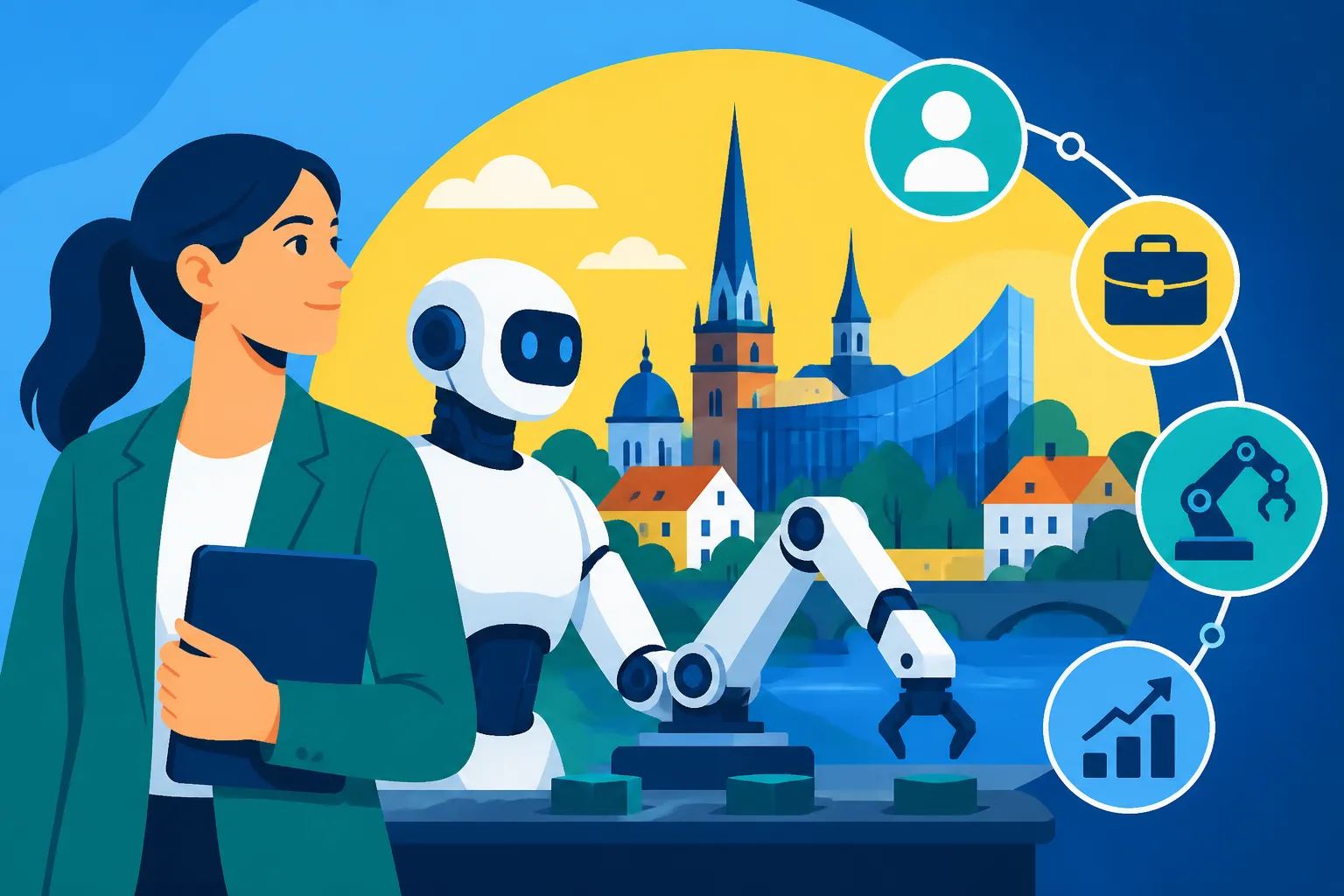
Working in Odense: The Robotics Hub Job Market Explained
The search for meaningful employment in a new country can often feel like trying to solve a Rubik's Cube blindfolded, especially when you're aiming for a niche but booming sector like robotics in a place you're still getting to know. Many expats dream of landing a job that not only utilizes their skills but also offers a high quality of life, yet the specifics of a city like Odense and its unique job market can be shrouded in mystery. This comprehensive guide aims to pull back the curtain, giving you a realistic, in-depth look at working in Odense, particularly within its vibrant and internationally recognized robotics industry, and how to navigate the practicalities of making it your professional home.
Odense's Rise as a Robotics Powerhouse
Odense, often overshadowed by the capital Copenhagen, has quietly but determinedly carved out a significant global reputation as a leading hub for robotics and automation. This isn't just a fleeting trend; it's a testament to decades of strategic development, collaboration, and a unique ecosystem that nurtures innovation. For many expats, the surprise of finding such a specialized, world-class industry in a relatively smaller Danish city is part of its charm.
The Ecosystem: Why Odense?
So, what exactly made Odense the "Robotics Capital of Denmark" and a major player on the international stage? It's not just one factor, but a perfect storm of elements that have coalesced over time. Firstly, the city has a strong historical foundation in manufacturing, which provided a natural transition into automation. Then, there's the pivotal role played by the University of Southern Denmark (SDU), particularly its Mærsk Mc-Kinney Møller Institute, which has a long-standing tradition of excellence in robotics research and education. This institution acts as a constant pipeline of talent and a hotbed for groundbreaking ideas, fostering an environment where academic innovation readily translates into commercial ventures.
Furthermore, the local municipality and regional development organizations have been incredibly proactive in supporting the robotics cluster. They've invested heavily in infrastructure, networking events, and business incubation programs, creating an almost symbiotic relationship between startups, established companies, and research institutions. This means that if you're joining a robotics firm in Odense, you're not just joining a company; you're becoming part of a tightly-knit, supportive community dedicated to advancing the field. This unique blend of academic prowess, industrial heritage, and civic support creates a fertile ground for both established professionals and ambitious newcomers alike.
Key Players and Innovation Drivers
The Odense robotics cluster is home to a diverse array of companies, from agile startups pushing the boundaries of niche applications to established global leaders defining industry standards. Names like Universal Robots, a pioneer in collaborative robots (cobots), and Mobile Industrial Robots (MiR), known for its autonomous mobile robots (AMRs), are globally recognized and are often the first points of interest for those looking to work in the field. These companies, alongside countless others, drive innovation across various robotics domains, including industrial automation, healthcare robotics, logistics solutions, and even agricultural technology.
What's particularly exciting about the Odense scene is the constant cross-pollination of ideas and talent. You'll find engineers, software developers, researchers, and business developers from all corners of the globe collaborating on projects that are shaping the future of automation. The spirit of innovation is palpable, fueled by a culture that encourages experimentation, learning from failures, and continuous improvement. This dynamic environment means that whether your passion lies in programming robot movements, designing advanced sensors, or developing AI algorithms, you're likely to find a company in Odense that aligns with your specific expertise and career aspirations.
Robotics Beyond the Factory Floor
While industrial automation might be the first thing that comes to mind when you hear "robotics," Odense's industry extends far beyond traditional factory settings. The city's robotics firms are actively developing solutions for an incredible range of sectors. Take healthcare, for instance, where robots are being designed to assist with surgeries, deliver medications in hospitals, or even provide companionship for the elderly. The logistics sector is another major area, with AMRs streamlining warehouse operations and last-mile delivery. Agriculture is also seeing significant advancements, with robots performing tasks like precision spraying, harvesting, and livestock monitoring.
This diversification means that the demand for talent is broad, encompassing not just traditional robotics engineers but also software developers specializing in AI and machine learning, UX/UI designers for intuitive robot interfaces, data scientists, and project managers with a strong understanding of complex technical projects. It's a field constantly evolving, requiring interdisciplinary skills and a willingness to adapt. For expats, this wide scope of application often translates into more varied and interesting career opportunities, moving beyond the stereotypical image of robots solely building cars.
Navigating the Odense Robotics Job Market
Finding your footing in any new job market can be challenging, but Odense's robotics sector, with its international outlook, often proves more accessible for English-speaking expats than other industries in Denmark. However, understanding the specific nuances and expectations will definitely give you an edge. Think of it as learning the optimal path for your robot to achieve its goal – preparation is key.
In-Demand Skills and Qualifications
The robotics industry, by its very nature, is a high-skill sector. Companies in Odense are typically looking for candidates with strong academic backgrounds, often at the Master's or PhD level, in fields like robotics engineering, computer science, electrical engineering, mechanical engineering, and mechatronics. However, academic qualifications are just the starting point. Practical experience is highly valued, whether it's through internships, personal projects, or previous industry roles. Expertise in specific programming languages such as C++, Python, and ROS (Robot Operating System) is often a prerequisite.
Beyond these core technical skills, a growing emphasis is placed on soft skills. Companies are looking for problem-solvers, critical thinkers, and individuals who can collaborate effectively in diverse teams. The ability to communicate complex technical concepts clearly, adapt to new technologies, and demonstrate a proactive approach to learning are all highly desirable. While the working language in many Odense robotics firms is English, demonstrating a willingness to learn Danish, perhaps through platforms like iTalki, shows a commitment to integrating into Danish society and can be a significant advantage in the long run, even if not immediately required for the job itself.
Where to Find Robotics Jobs
When you're ready to start your job hunt, don't just rely on a single channel. The Odense robotics sector has several key avenues for finding opportunities. Firstly, the official Odense Robotics website is an invaluable resource. It not only lists job openings from member companies but also provides a comprehensive overview of the cluster, its events, and its various players. This site is your direct portal to the heart of the industry. Secondly, global professional networking platforms like LinkedIn are indispensable. Many Danish companies, including those in Odense, actively post their vacancies there and use it for recruitment. Make sure your profile is updated, professional, and highlights your robotics-specific skills.
Thirdly, consider company career pages directly. Many of the larger players like Universal Robots and MiR have dedicated sections on their websites for open positions. Attending industry events, both virtual and in-person, can also open doors to the hidden job market and allow you to network directly with recruiters and hiring managers. Don't underestimate the power of simply reaching out to professionals in the field on LinkedIn for informational interviews; Danes are generally quite approachable if you're respectful and genuine in your curiosity. For a broader perspective on job hunting in Denmark, our guide on Job Hunting in Denmark: Strategies for English-Speaking Expats offers excellent general advice that applies to Odense too.
Crafting Your Danish Application
Applying for jobs in Denmark, even in an internationalized sector like robotics, has its own set of cultural nuances. Your CV should be concise, professional, and focus on achievements rather than just responsibilities. While Danish companies appreciate a professional layout, they often prefer a more direct and less flamboyant approach than you might find in some other countries. Make sure to tailor your CV to each specific role, highlighting the skills and experiences most relevant to the job description. For deeper insights, checking out our article on Writing a Danish-Style CV: Formats, Photos, and Professional Tone can be very beneficial.
Your cover letter is equally important. This is your opportunity to clearly articulate why you are a good fit for this specific company and this specific role, demonstrating that you've done your research. Danes value direct communication, so be clear and concise. Avoid overly strong or boastful language, as modesty is generally appreciated (a concept sometimes tied to Janteloven). Express enthusiasm, but ground it in realistic understanding of the company and the position. Crucially, don't forget to mention your visa status or right to work in Denmark if you're not an EU/EEA citizen, as this can streamline the initial screening process. Understanding the broader Danish Work Culture: Flat Hierarchies, Hygge, and Direct Communication can also help you frame your application appropriately.
Life and Work-Life Balance in Odense
Beyond the job itself, moving to Odense means embracing a whole new lifestyle. Denmark is renowned for its emphasis on work-life balance, and Odense is no exception. It offers a quality of life that often surprises newcomers, especially those coming from larger, more frantic cities.
Cost of Living and Commuting
While Denmark as a whole has a reputation for being expensive, Odense often presents a slightly more affordable option compared to Copenhagen. Rent, in particular, tends to be more reasonable, allowing for better access to spacious apartments or even houses, especially if you move slightly outside the city center. Groceries and public transport costs are generally on par with other major Danish cities, but careful budgeting, informed by our guide on Cost of Living in Denmark 2026: Budgets for Singles and Families, can help you manage your expenses effectively.
Commuting in Odense is a breeze. The city is compact and incredibly bike-friendly, meaning many residents opt for cycling as their primary mode of transport. The public transport system, primarily buses, is efficient and covers the entire city and surrounding areas. Traffic jams are rare, and the overall pace of life is much calmer than in bustling metropolises. This ease of movement significantly contributes to the high quality of life, allowing you more time for personal pursuits rather than spending hours stuck in transit.
Building a Social Life and Learning Danish
One of the biggest concerns for many expats is building a social life and integrating into a new community. Odense, despite being smaller, has a surprisingly vibrant international community, largely thanks to SDU and the robotics cluster. There are numerous expat groups, social clubs, and international networks you can join. Websites and Facebook groups dedicated to expats in Odense are great starting points for meeting new people and finding local events. Danes, while sometimes perceived as reserved initially, are generally open and friendly once you break the ice.
Learning Danish, while often not strictly necessary for your robotics job, will significantly enhance your integration and daily life. It opens doors to deeper connections with locals, allows you to navigate administrative tasks more smoothly, and generally makes you feel more at home. Odense offers various Danish language schools (Sprogcenter) that provide subsidized classes for new residents. You can also supplement your learning with online tools or services like iTalki, which can help with conversational practice and cultural nuances. Our article on Learning Danish: Sprogcenter, FVU, and the Importance of the Language provides more details on available options and their benefits. Don't be afraid to make mistakes; Danes appreciate the effort!
Practicalities for Expats in Odense
Beyond the job and social life, there are crucial administrative and financial aspects every expat needs to understand when working in Odense. Denmark has a well-structured system, but it can be quite different from what you're used to.
Understanding Danish Employment Law
Working in Denmark means understanding the unique aspects of Danish employment law and the concept of 'flexicurity.' This model combines flexible labor market rules for employers with a strong social safety net for employees, including unemployment benefits and active labor market policies. Most employment terms are governed by collective agreements between trade unions and employer associations, even if you're not a member of a union yourself. It's crucial to understand your contract, especially regarding notice periods, working hours, and holiday entitlements. Our comprehensive guide on The Danish Holiday Act (Ferielov): Earning and Spending Vacation Days is a must-read for anyone starting work.
While you might be joining a robotics firm that operates primarily in English, it's wise to consider joining a relevant trade union or an A-kasse (unemployment insurance fund). Organizations like IDA (for engineers and natural scientists) or DJØF (for legal, social science, and economics graduates) are particularly relevant for professionals in the robotics sector. They offer legal advice, career counseling, and, in the case of A-kasse, financial security if you become unemployed. For an in-depth look at your options, our piece on Choosing a Trade Union: DJØF, IDA, HK, and 3F Compared can help you make an informed decision. These organizations can be invaluable advocates, ensuring your rights are protected within the Danish system.
Tax and Financial Considerations
One of the areas that often causes the most confusion for new expats is the Danish tax system. It’s definitely complex, with a progressive tax rate that can seem high at first glance, but also a robust welfare system and various deductions. Upon arrival, one of your first tasks will be to set up your NemKonto and MitID, which are essential for receiving your salary, paying bills, and interacting with public authorities like SKAT (the Danish tax agency). For a full breakdown, our article on NemKonto and MitID: The Core of Danish Digital Finance (2027) is indispensable.
You’ll be subject to A-Skat (income tax) and AM-bidrag (labor market contribution) from your salary. It's crucial to get your preliminary tax assessment (Forskudsopgørelse) correct with SKAT to avoid nasty surprises later. Many expats find the services of a tax consultant helpful, especially in their first year, to ensure they're taking advantage of all eligible deductions. There are services like Taxes for Expats specifically designed to help foreigners navigate these complexities. Understanding your payslip and the various deductions is paramount. Our pillar article on Taxes in Denmark Explained: A-Skat, AM-bidrag, and Marginal Rates provides a detailed overview that will help demystify the system.
Disclaimer
Please note that while every effort has been made to provide accurate and up-to-date information, the landscape for expats in Denmark, including regulations for work, visas, and taxation, can change. This guide is for informational purposes only and does not constitute legal or financial advice. We strongly recommend consulting official government sources and professional advisors for personalized guidance.