SU Loans (SU-lån): Interest Rates and Repayment Terms for Expats
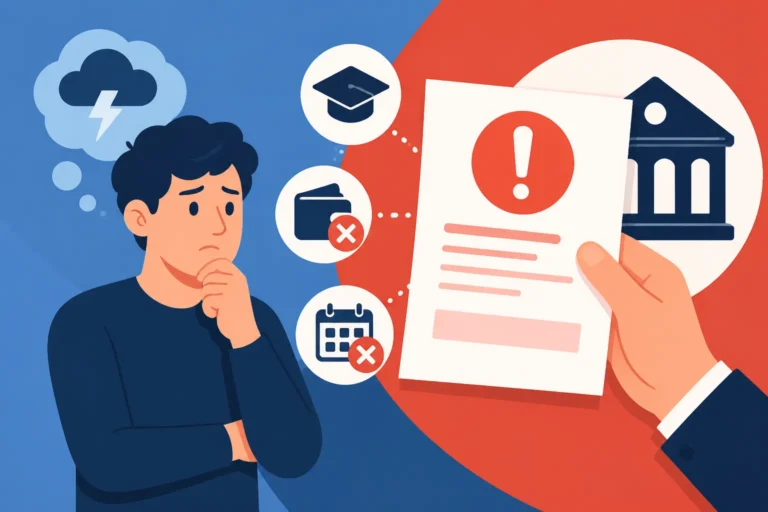
Trying to survive on a student budget in Copenhagen or Aarhus often feels like a losing battle against fifty-kroner coffees and eye-watering rent. I remember my first winter here, staring at my bank balance and wondering if I could realistically choose between heating my room and buying fresh vegetables. This guide breaks down the SU loan system so you can borrow wisely and manage repayments without a panic attack.
Understanding the Foundation of the SU Loan System
The Danish State Educational Grant and Loan Scheme, known locally as SU (Statens Uddannelsesstøtte), is famous worldwide, but for us expats, it comes with a mountain of fine print. While the grant portion is "free money," the SU loan (SU-lån) is a debt that must be repaid with interest. It is designed to supplement the grant for those who find that even with the monthly stipend, the cost of living in Denmark is simply too high.
Before you even look at the loan, you have to navigate the eligibility for the grant itself. For most of us, this means proving we are more than just students. If you are an EU/EEA citizen, you likely know the drill of the "worker status" requirement. You have to maintain a job for 10-12 hours a week to unlock the system. If you lose that job, your SU—and by extension, your loan—can be cut off. Some people have lost their status because they worked 9.5 hours instead of 10 for one week, so the stakes are incredibly high. You should check the details on SU for EU/EEA Citizens: Proving "Worker Status" to Get the Grant to make sure your foundation is solid before you start borrowing.
The loan is optional. You can choose to take the grant only, or you can take the grant plus the loan. There is also a "supplementary" loan for those with children or those who are in the final stages of their degree (the "completion loan"), but the standard SU loan is what most students use to cover their deposit on a tiny Vesterbro apartment or their monthly grocery bill at Netto.
Eligibility and the Worker Status Trap for Internationals
Let's be brutally honest: the Danish government is not exactly handing out loans to every foreigner who hops off a plane at Kastrup. To qualify for a SU loan, you must first be approved for the SU grant. This is where most expats hit a brick wall. Unless you have lived in Denmark for five continuous years or are married to a Danish citizen, you are likely applying under EU law as a "migrant worker."
Maintaining this status is a full-time mental burden. You are constantly calculating your hours to ensure you meet the SU Equal Status Rule: How EU Citizens Qualify via 10-12 Working Hours requirements. If you fall below the threshold, the state may demand that you pay back every krone of the grant and the loan you received during that period. This isn't a hypothetical threat; it happens every semester. When you take out a loan, you aren't just borrowing money; you are betting on your ability to stay employed while finishing a demanding degree.
For non-EU students, the path is even narrower. Generally, if you are here on a standard student visa, you are expected to be self-sufficient. However, there are exceptions for those with permanent residency or those who have lived in Denmark for a specific period under family reunification. It is vital to understand State Educational Grant (SU): How International Students Qualify before you make any financial plans, as the rules for non-EU citizens are significantly stricter.
Interest Rates During and After Your Studies
One of the biggest misconceptions I hear in the expat community is that SU loans are "interest-free." They absolutely are not. The confusion usually stems from the fact that you don't have to make any payments while you are studying. However, interest is accruing from the very first month the money hits your NemKonto.
While you are actively studying, the interest rate is fixed at 4% per annum. In the current global economy, 4% isn't terrible, but it's also not negligible. If you take the full loan amount every month for a three-year bachelor’s degree, that 4% interest starts compounding immediately. By the time you graduate, your "actual" debt will be significantly higher than the sum of the monthly deposits you received.
Once you finish your studies, the interest rate changes. It is no longer a fixed 4%. Instead, it is tied to the "diskonterate" (the discount rate set by the Danish National Bank) plus a small surcharge (currently 1%). Historically, this was incredibly low—sometimes under 1%—but as central banks have raised rates, the cost of holding this debt has gone up. It is a variable rate, meaning your monthly "cost of borrowing" can fluctuate throughout the life of the loan. This is something many expats forget when they move back home and ignore their Danish bank accounts.
How to Apply and Manage Your Payouts
The application process is surprisingly digital and efficient, provided you have your digital life in order. You cannot do anything in Denmark without a CPR number and MitID. If you are still waiting for these, you are effectively invisible to the system. You can read more about how these work in the guide on NemKonto and MitID: The Core of Danish Digital Finance (2027).
Once you have your MitID, you log in to "minSU" on the official SU website. Here, you can see exactly how much you are eligible to borrow. You can choose to take the full amount or just a portion. My advice? Only take what you absolutely need. It’s tempting to take the full DKK 3,400+ (the 2026 rate) every month to live a more "hyggelig" lifestyle, but remember that you are borrowing from your future self.
You can also apply for the loan retroactively within the same calendar year. If you realized in November that you’ve been living too close to the edge, you can apply for the loan for the previous months of that year, and they will pay it out in a lump sum. This is a great safety net, but it requires discipline. Also, keep an eye on your income. If you work too many hours at your student job, you might exceed the "fribeløb" (income limit). If this happens, you have to pay back the grant, but the loan rules are slightly different. Check SU Fribeløb: How Much Can You Earn Before You Must Repay SU? to avoid a nasty surprise at tax time.
| Loan Phase | Interest Rate (Approx 2026) | Payment Requirement |
|---|---|---|
| During Studies | 4% Fixed | None |
| Grace Period | Variable (National Bank Rate + 1%) | None |
| Repayment Phase | Variable (National Bank Rate + 1%) | Monthly Installments |
The Repayment Timeline: What Happens After Graduation
The Danish government is quite patient, but they are also persistent. You do not start paying back your loan the day after you toss your graduation cap. There is a grace period. Repayment typically begins on January 1st, one year after the end of the year in which you finished your studies.
For example, if you graduate in June 2026, your "grace period" lasts through the rest of 2026 and all of 2027. Your first payment wouldn't be due until January 2028. This is intended to give you time to find a job, settle into your career, and hopefully navigate the Job Hunting in Denmark: Strategies for English-Speaking Expats process. I used my grace period to aggressively save, though many of my peers used it to travel, only to be shocked when the first bill arrived a year later.
The repayment period usually lasts between 7 and 15 years, depending on the size of your debt. Udbetaling Danmark (the agency that handles the payments) will calculate a monthly installment plan for you. If you owe a small amount, you might pay it off quickly. If you’ve borrowed for a full Master’s degree, you’ll be seeing those deductions for a long time. You can always choose to pay the loan back faster by making voluntary extra payments, which I highly recommend if you want to save on interest.
Moving Abroad and Repaying from Outside Denmark
This is where things get complicated for the "global nomad" expat. Many people finish their degrees in Denmark and then move to London, Berlin, or New York. The debt does not disappear when you cross the border. In fact, if you move away and don't update your contact information, the interest and penalties will pile up until the Danish authorities eventually track you down through international debt collection agencies.
The most important thing you can do is keep your E-Boks: Don't Forget to Update Your Digital Mail Address current or ensure you can still log in to see your "Digital Post." Udbetaling Danmark will send your payment schedule there. If you are living abroad, you will likely need to set up an international transfer to your Danish NemKonto or pay via a specialized link.
Keep in mind that if you are paying back a DKK loan with a different currency, you are at the mercy of exchange rate fluctuations. If the Krone strengthens against the Euro or the Dollar, your monthly payment effectively becomes more expensive. Also, don't forget that the interest you pay on your SU loan is actually tax-deductible in Denmark. If you still have some Danish income or are working for a Danish company remotely, you can claim this. For complex cross-border situations, I’ve found that consulting with a service like Taxes for Expats can save you a lot of headache in ensuring you aren't being double-taxed or missing out on deductions.
Strategic Financial Advice for Borrowers
Taking a loan in a foreign country is a big decision. Before you click "apply" on minSU, take a hard look at your career prospects. Are you studying something that leads to a high-paying role in the Danish pharmaceutical or tech sectors? If so, the loan is a manageable investment in your future. If you are struggling to learn the language and your job prospects are uncertain, a large debt can become an anchor.
One of the best ways to ensure you can pay back your loan is to maximize your earning potential in Denmark as quickly as possible. This almost always comes down to language. Even if your degree is in English, the "hidden" job market is Danish. I spent my first year using iTalki to find tutors who could help me move beyond "pølse" and "tak" into professional Danish. Being able to interview in Danish changed my salary trajectory and made my SU loan feel like a minor monthly subscription rather than a crushing burden. You can find more tips on this in our guide on Learning Danish: Sprogcenter, FVU, and the Importance of the Language.
Also, be aware of how the loan interacts with your overall tax profile. Interest is reported to SKAT, and it should automatically show up on your annual assessment. However, mistakes happen. You should verify your Taxes in Denmark Explained: A-Skat, AM-bidrag, and Marginal Rates to ensure the interest is correctly reflected in your deductions.
Common Pitfalls and How to Avoid Them
The biggest pitfall is the "forgetfulness" factor. Because the loan is managed through digital portals like Borger.dk and minSU, it’s easy to stop checking them once you start your first "real" job. Then, three years later, you realize you missed a notification that your interest rate spiked or that a payment didn't go through because you closed your old bank account.
Another trap is the "Supplementary Loan." There are extra amounts you can borrow if you are a parent or if you run out of "SU clips" (the monthly units of the grant). These have different rules and sometimes different interest implications. Always read the specific terms in your "Støttemeddelelse" (the letter you get in E-Boks when your SU is approved).
Finally, don't assume that because you are an expat, you can "just leave" and ignore the debt. Denmark is part of extensive international agreements for debt recovery. It’s much better to contact Udbetaling Danmark if you are having financial trouble. They are surprisingly human and can often work out a temporary "deferment" or a lower monthly payment if you can prove you are unemployed or experiencing hardship.
Maximizing Your Student Experience Without Over-Borrowing
While the SU loan is a great tool, it shouldn't be your first resort. Denmark has a robust "foreningsliv" (club culture) and many student discounts that can help you live a full life on just the grant and a part-time job. Before you take the loan, see if you can find a Finding a Student Assistant Job (Studiejob) Without Speaking Danish that pays well enough to bridge the gap.
If you do take the loan, use it as a tool to gain stability. Use it to pay for that deposit so you aren't living in a precarious sublet, or use it to free up time so you can focus on your thesis. Just remember that the 4% interest is working in the background while you study. It’s a bit like the Danish winter—it’s quiet and easy to ignore when you’re inside with a candle, but it’s still there, and eventually, you’ll have to walk out into it.
Disclaimer
The information provided in this article is for educational and informational purposes only and does not constitute financial, legal, or tax advice. The Danish SU rules, interest rates, and immigration laws are subject to frequent changes by the Danish Ministry of Higher Education and Science and the Danish Parliament. While we strive to keep this information up to date for 2026, you should always consult official government sources such as su.dk and borger.dk or seek professional advice from a qualified accountant or legal expert before making significant financial decisions. Your eligibility for SU and loans depends on your individual circumstances, including residency status, employment, and academic progress.