Bringing Parents to Denmark: Visas for Elderly Dependents
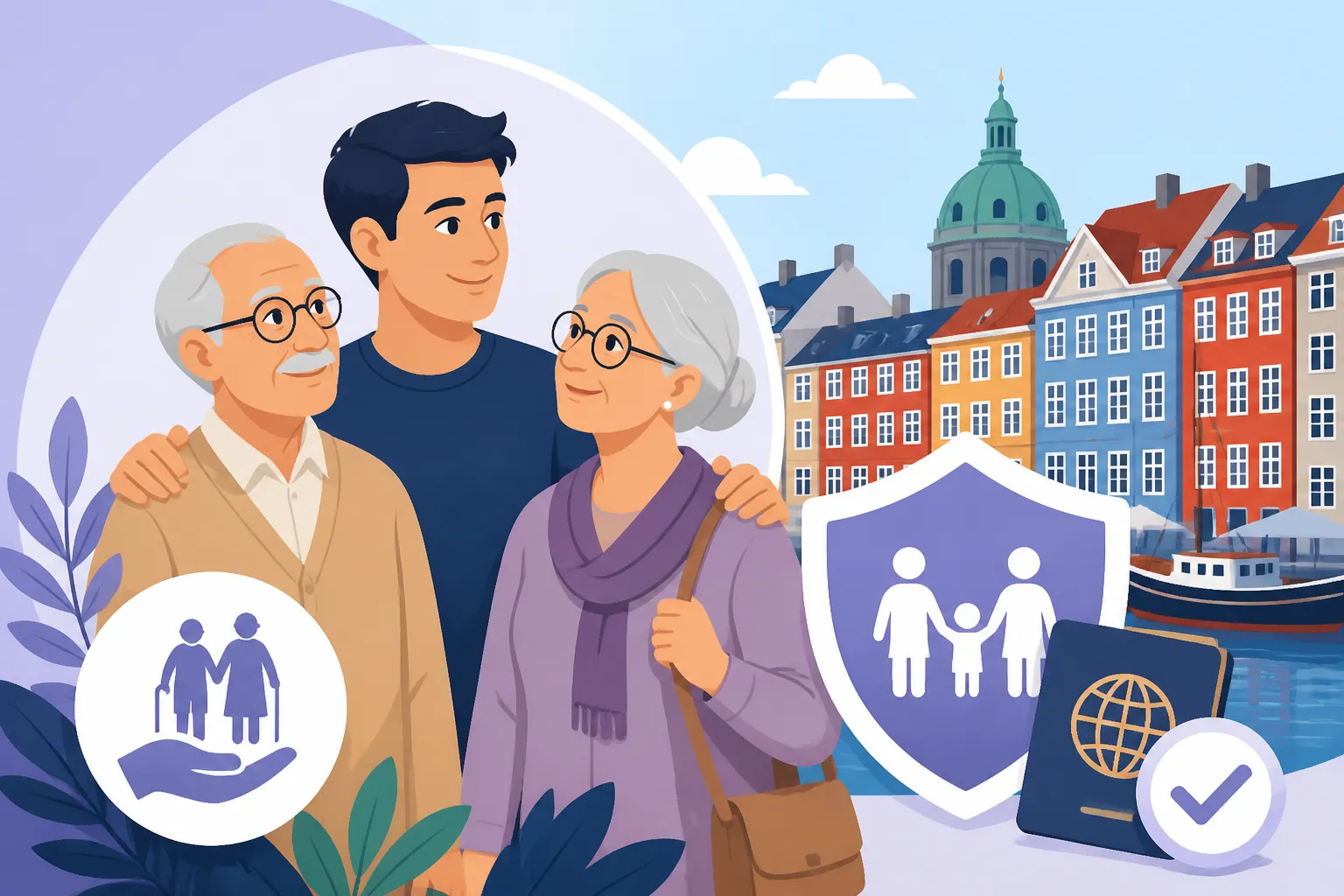
One of the most challenging and often heartbreaking aspects of moving to Denmark as an expat is the reality of bringing your elderly parents or other dependent relatives to live with you. While the Danish system is robust and provides excellent social support for its citizens and residents, the rules for family reunification with parents are exceptionally strict, leaving many foreigners feeling isolated and frustrated. This guide will walk you through the complex landscape of Danish immigration laws concerning elderly dependents, helping you understand the immense hurdles and very limited pathways available, and what you absolutely need to know if you're even considering this journey.
The Harsh Realities of Family Reunification for Elderly Parents
Let's not sugarcoat it: Denmark has some of the most restrictive family reunification laws in Europe, especially when it comes to parents or adult children. If you've managed to bring your spouse or minor children here, you might assume the path for your parents would be similar, but alas, it's a completely different ball game. The Danish government's stance is heavily geared towards preventing an undue burden on the welfare system, which means only in the most extreme, specific, and often tragic circumstances are elderly dependents considered for residence. It's a tough pill to swallow, and many expats face significant emotional distress grappling with this reality.
The "Dependency" Clause: More Than Just Financial Support
When SIRI (the Danish Agency for International Recruitment and Integration) evaluates applications for parents, they aren't just looking to see if you send them money. They are looking for absolute, undeniable proof of dependency – and not just financial. This means your parent must have been continuously and entirely dependent on you for their livelihood and care for a significant period before you even moved to Denmark, and they must have no other family members in their home country who could reasonably provide support. This isn't about supplementing their income; it's about being their sole lifeline.
Think about it this way: if your parent has any other children, even adult siblings of yours in their home country, the Danish authorities will likely expect those siblings to provide care. If your parent receives any pension, even a small one, or has any assets, or can still live independently to a reasonable degree, the application becomes incredibly difficult. The dependency must be so profound that without your support, your parent would literally be destitute or unable to cope with basic life functions. This is a far cry from wanting your parents nearby for emotional support or because you want to help them live a better life.
The Financial Burden: Proving Self-Sufficiency
Even if you can somehow prove this extremely high bar of dependency, you, the expat sponsor, must demonstrate immense financial capacity. You're not just responsible for your parent's daily living costs; you're on the hook for any potential medical expenses not covered by the public system (which will be most of them initially, and often even with a Yellow Card, as they might not be fully integrated into the public healthcare system immediately). You must also deposit a significant bank guarantee, sometimes in the range of DKK 100,000, to cover potential future expenses if your parent were to need public assistance.
This is a stark contrast to how many other countries approach family visas, where the emphasis might be more on emotional ties or a general commitment to support. Here, it’s a rigorous financial and dependency test. For many, even those earning a good salary, this level of financial commitment on top of existing expenses for their own family in one of the most expensive countries in the world (see our guide on Cost of Living in Denmark 2026: Budgets for Singles and Families) is simply insurmountable. The idea is to ensure that your parent will never, ever become a burden on the Danish state, and the bar for that is set incredibly high.
Limited Visa Options for Elderly Dependents
The routes for bringing elderly parents to Denmark are incredibly narrow, primarily falling under the general family reunification categories, but with very specific interpretations for parents. It's not like applying for a student visa or a work permit where various schemes exist.
Standard Family Reunification for Parents (Extremely Rare)
This is the main, albeit incredibly challenging, route. As discussed, it requires exceptional circumstances of dependency. You, the sponsor, must:
- Be a Danish citizen or have a permanent residence permit in Denmark. If you are on a temporary work visa, your chances are practically nil unless you are an EU citizen and your parent is also an EU citizen exercising treaty rights, which is a different scenario entirely. For non-EU citizens on temporary permits, it's generally not possible.
- Prove full and continuous dependency: This is the absolute biggest hurdle. You need to demonstrate that your parent has been entirely dependent on you for their sustenance and care in their home country for a prolonged period. This means covering all their essential needs – food, housing, medical care – and proving they have no other means of support, no other adult children, and no other close relatives who could realistically provide support. SIRI often asks for bank statements, money transfer records, and detailed affidavits from local authorities or doctors in the parent's home country.
- Demonstrate sufficient financial means: You must be able to support your parent without them ever needing public assistance. This includes housing them adequately and covering all their living and potential medical costs. You'll likely need to provide bank statements, pay slips, and demonstrate stable employment in Denmark. The exact amount required can vary, but it’s substantial. This is often linked to the general "self-support requirement" which we explain further in The Self-Support Requirement: Receiving Dagpenge Before Permanent Residency.
- Deposit a bank guarantee: This is typically a security deposit of around DKK 100,000, which is held by the authorities and can be used to cover any public expenses if your parent becomes a burden on the state. It's only returned after a certain period if no such expenses are incurred.
- Provide adequate housing: You must have suitable housing for your parent, meaning enough space for them to live in your home without creating overcrowded conditions.
As you can see, the bar is set incredibly high, designed for truly desperate situations rather than general desires for family closeness.
The EU/EEA Freedom of Movement Rules (Different but Still Complex)
If you are an EU/EEA citizen living and working in Denmark, and your parent is also an EU/EEA citizen, the rules can be slightly less stringent, but they are far from easy. Under EU free movement rules, dependent direct relatives in the ascending line (parents, grandparents) can join an EU/EEA citizen. However, the dependency requirement still applies, meaning you must prove that your parent is genuinely dependent on you for their livelihood. This is where the term "dependent" is interpreted more broadly than in the strict Danish national law, but it still requires concrete evidence of financial or physical reliance.
Furthermore, if your parent is not an EU/EEA citizen (e.g., your German parent is sponsoring their Turkish parent), then the general third-country national rules apply, making it much harder. Even with EU freedom of movement, proving dependency still requires a lot of documentation, and you'll still need to register their residence with the Danish Agency for International Recruitment and Integration (SIRI).
Humanitarian Grounds (Last Resort, Exceptionally Rare)
In extremely rare cases, if your parent faces truly exceptional humanitarian circumstances in their home country and has no one else to care for them, a residence permit might be granted on humanitarian grounds. However, this is not a family reunification route and has an even higher, almost impossible, threshold. It applies to situations of severe illness where care is impossible in their home country, or situations of extreme vulnerability where their life or health is at direct, immediate risk, and you are the only person who can provide care. This is typically reviewed by the Danish Immigration Service (Udlændingestyrelsen) and is considered a last resort, rarely successful.
Required Documentation and Common Hurdles
Preparing an application to bring your elderly parents to Denmark is a monumental task, and the amount of documentation required can feel overwhelming. Every single document needs to tell a clear, consistent story of absolute dependency and your financial capability.
The Mountain of Paperwork
You will need to gather a vast array of official documents, often needing certified translations and apostilles. This might include:
- Proof of Relationship: Birth certificates for you and your parent.
- Proof of Dependency:
- Detailed bank statements from both you and your parent, showing consistent financial support from you and lack of independent income for them.
- Affidavits from doctors, social workers, or local authorities in their home country, confirming their health status, inability to care for themselves, and lack of local support.
- Records of money transfers, utility payments, and rent payments you've made on their behalf.
- Proof of their living conditions in their home country, demonstrating inadequacy or their inability to maintain it.
- Your Financial Documentation:
- Employment contracts, recent pay slips (at least 6-12 months), and annual tax statements (årsopgørelse).
- Bank statements showing substantial savings.
- Proof of your housing in Denmark (lease agreement or property deed), demonstrating adequate space.
- Health Insurance: This is absolutely critical. Your parent will not automatically be covered by the Danish public health system upon arrival. You will need to secure comprehensive private health insurance for them, covering all medical expenses, including hospitalization, medication, and doctor visits, until they are potentially integrated into the system (which can take a while and isn't guaranteed for parents). Our guide on Expat Health Insurance: Coverage Before You Get Your CPR Number offers more detail on this initial phase.
- Passport and Visa Application Forms: Standard passport copies, visa application forms (often via the SIRI portal), and potentially biometrics. For detailed information on the overall process, see Danish Visas and Residence Permits: The Complete Expat Guide (2027).
The Translation Conundrum
Many of these documents will not be in Danish or English, especially those from your parent's home country. This means you'll need certified translations. Do not underestimate this step. Any errors or unofficial translations can lead to immediate rejection. Companies like RushTranslate and Translayte offer certified translation services that are often accepted by Danish authorities. Be prepared for this to be a significant expense, both in terms of time and money. It’s not just about translating the words, but ensuring the translation is officially recognized and accurate for legal purposes.
The Psychological and Emotional Toll
Navigating this process can be incredibly draining. The constant need to prove your parent's vulnerability and your financial strength, combined with the often-negative or skeptical responses from authorities, can be emotionally exhausting. It often feels like you're fighting an uphill battle against a system designed to keep family members apart unless their situation is dire. Expats frequently report feelings of guilt, frustration, and helplessness when faced with these strict rules. It's important to seek support from expat communities or family lawyers if you decide to pursue this path, as it's not a journey you should undertake alone. The processing times for SIRI can also be lengthy, adding to the stress, as explored in SIRI: Processing Times, Biometrics, and Appeals.
Navigating the Application Process: A Step-by-Step Overview
While each case is unique, here’s a general overview of the steps involved, assuming you meet the stringent dependency and financial criteria:
Step 1: Preliminary Assessment and Research
Before you even think about submitting an application, thoroughly assess your situation against SIRI's strict requirements. Can you genuinely prove your parent's absolute and continuous dependency on you? Do you have the financial means and a suitable home? This is where many expats realize the path is likely closed. Consult the official SIRI website for the most current guidelines, as rules can change.
Step 2: Gather All Necessary Documentation
Start compiling every single document mentioned above. This is the most time-consuming part. Pay close attention to validity dates for passports and certificates. Obtain any necessary apostilles or legalizations for documents from your parent's home country.
Step 3: Get Documents Translated and Certified
Crucial step! Any document not in Danish, English, Norwegian, or Swedish must be translated by a certified translator. Ensure the translation is accepted by Danish authorities. Services like RushTranslate and Translayte can provide certified translations that meet these requirements.
Step 4: Complete the Application Form
Fill out the relevant application form for family reunification with parents on SIRI's online portal (if available) or download the physical forms. Be meticulous. Any missing information or inconsistencies can lead to delays or outright rejection.
Step 5: Pay the Application Fee
There is a non-refundable application fee for family reunification cases. Make sure you pay the correct amount and attach proof of payment to your application.
Step 6: Submit the Application
Submit the application, along with all supporting documents, to SIRI. This might be done online or in person at a Danish diplomatic mission in your parent's home country, or at a SIRI branch if your parent is legally in Denmark (which is rare for this type of application). Be prepared for your parent to potentially attend a biometric appointment.
Step 7: Await Processing and Potential Interview
SIRI will process the application. This can take many months, or even over a year, depending on the complexity of the case and current processing times. Your parent may be called for an interview, either at the Danish diplomatic mission or via video call, to confirm details of their dependency and situation.
Step 8: Decision and Next Steps
If, by some slim chance, the application is approved, your parent will be granted a residence permit. You will then need to assist them with moving to Denmark, getting their CPR number, and integrating into daily life. Remember, public healthcare integration isn't immediate or automatic for parents under these circumstances. Our guide on Healthcare in Denmark for Foreign Residents: Complete System Guide (2027) provides broader context for navigating the system. If the application is rejected, you usually have the right to appeal the decision, but be prepared for a long and arduous appeal process.
Table: Key Challenges for Bringing Elderly Parents to Denmark
| Aspect | Spouses/Minor Children | Elderly Parents/Adult Children |
|---|---|---|
| Dependency Proof | Emotional, marital, parental bond. | Extreme and continuous financial/physical dependency, no other support. |
| Financial Burden | Sponsor must meet specific income requirements. | Sponsor must demonstrate exceptional financial means and often a large bank guarantee. |
| Housing | Adequate housing for the family. | Adequate housing specifically for the parent. |
| Age Rule | 24-year rule for spouses (sponsor and applicant must be 24+). | No specific "age rule," but age can influence dependency assessment. |
| Visa Schemes | Clear "family reunification" schemes. | Highly restrictive, often only humanitarian or strict dependency considered. |
| Processing Time | Standard SIRI processing times. | Often longer, more scrutiny due to high bar. |
| Success Rate | Generally higher if criteria met. | Extremely low, requires truly exceptional circumstances. |
Post-Arrival Considerations (If You Succeed)
Should you overcome the astronomical odds and secure a visa for your parent, the journey isn't over. Integrating an elderly parent into Danish society comes with its own set of challenges.
Healthcare Access
As mentioned, your parent will likely not immediately receive full public healthcare coverage like a Danish citizen or a working expat. This is a critical point. You will almost certainly need private health insurance to cover them initially. Even with a CPR number and access to The Yellow Health Card (Sundhedskort): Your Key to Danish Healthcare, the system for dependent parents can be complex, and you might find that certain services or long-term care facilities are not readily available or are extremely difficult to access without a strong track record of residency and contributions. Navigating the Danish medical system is a learning curve, and doing so for an elderly, potentially non-Danish speaking parent requires immense effort.
Language and Social Integration
Denmark is not the easiest place to integrate if you don't speak Danish, and this difficulty is amplified for elderly individuals. Social circles often revolve around common language and shared cultural understanding. While there are expat communities, finding age-appropriate social activities where English is spoken can be challenging outside of major cities. Loneliness can be a real issue. Encourage participation in local activities, even if it's just gentle walks in nature or visiting local libraries (many have English sections!), but prepare for a potentially slow and difficult integration process.
Driving and Mobility
If your parent relies on driving in their home country, this will be a major adjustment. Denmark has excellent public transport, but navigating it can be daunting for someone new, especially if they have mobility issues or language barriers. Car ownership is also extremely expensive due to high taxes. For more on navigating this, you might find our guide on Public Transport in Denmark: Rejsekort, Trains, and Commuting helpful.
The Overall Picture: A Difficult but Understandable Policy
While frustrating and often painful for expats, Denmark's stringent policies for bringing elderly parents reflect a deeply ingrained national commitment to the welfare state and a desire to protect its social safety nets. The system is designed to provide comprehensive care for its contributing residents, and allowing broad family reunification for non-contributing elderly dependents would place an immense strain on resources.
For many expats, the practical reality is that bringing elderly parents to Denmark is simply not feasible under current laws. It often forces families to make difficult choices, such as one child remaining in the home country, or exploring alternative options in countries with more lenient immigration policies for dependents. If you are determined to pursue this path, be prepared for a long, demanding, and often disappointing journey. Arm yourself with every piece of information, meticulous documentation, and realistic expectations, and seek professional legal advice tailored to your specific situation.
Disclaimer
The information provided in this guide is for general informational purposes only and does not constitute legal advice. Immigration laws and regulations in Denmark are complex and subject to change. It is essential to consult with the official Danish Agency for International Recruitment and Integration (SIRI) or a qualified immigration lawyer for advice specific to your individual circumstances.