Navigating Negative Interest Rates: Historical Context in Danish Banks
Moving to Denmark often feels like entering a financial twilight zone where the rules of gravity—or at least the rules of interest—don’t quite apply as they do elsewhere. For over a decade, Danish residents lived through an era where banks actually charged customers to keep money in their accounts. This guide breaks down the history of negative interest rates in Denmark and explains how you can navigate the current banking landscape without losing your hard-earned savings to fees or outdated policies.
The Sub-Zero Era: Why Denmark Went Negative
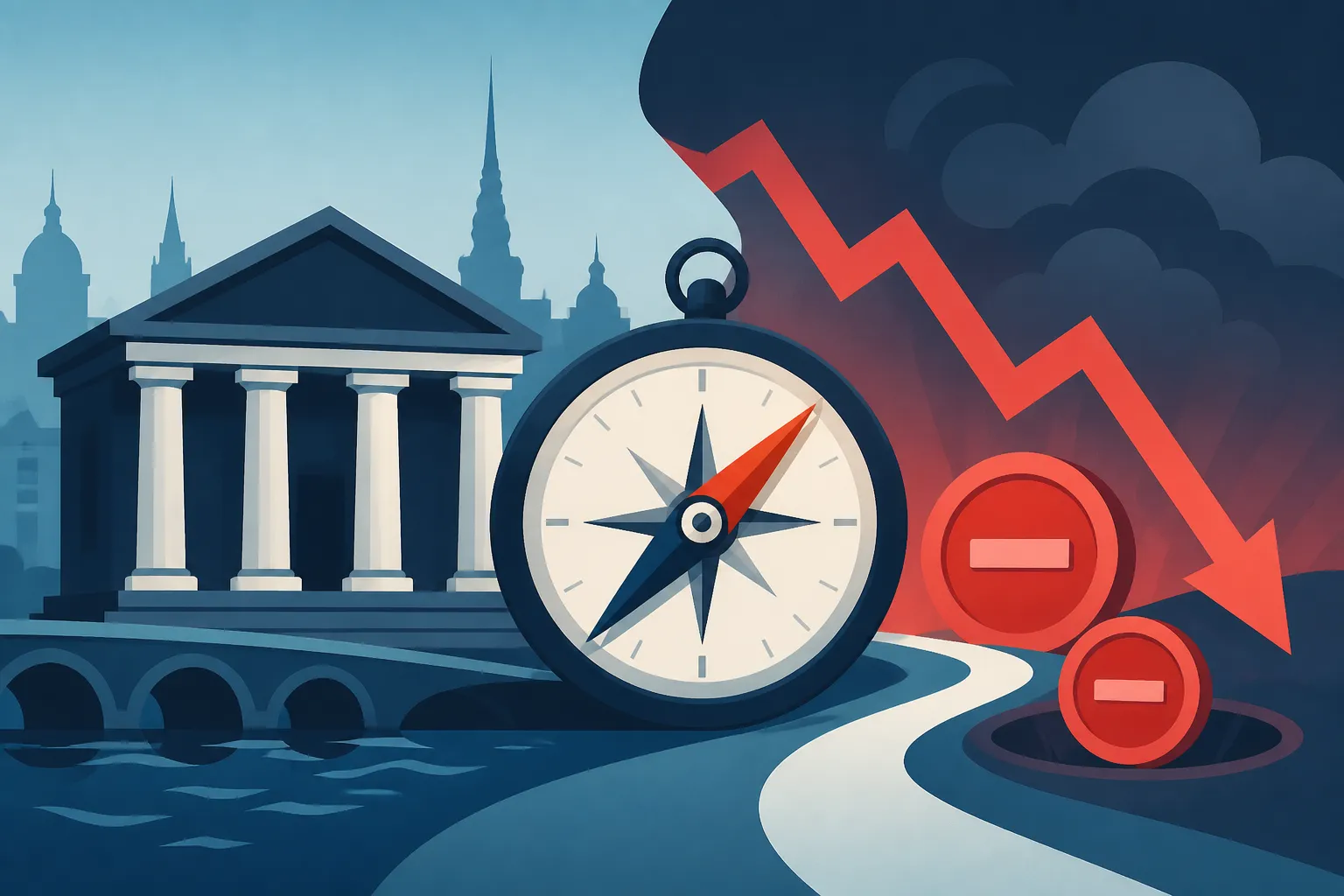
To understand why your Danish bank might still feel a bit "expensive" compared to back home, you have to look back at 2012. Denmark became one of the first countries in the world to experiment with negative interest rates. It wasn't because the banks were greedy—though many frustrated expats might argue otherwise—but because the Danish National Bank (Nationalbanken) was fighting a desperate battle to keep the Danish Krone pegged to the Euro.
The peg is a cornerstone of the Danish economy. If too many people want to buy Krone, the currency becomes too strong, which hurts Danish exports. To stop investors from flooding the market with money, the Nationalbanken dropped interest rates below zero. The idea was simple: make it expensive to hold Krone so that investors would look elsewhere. For a long time, it worked, but it created a bizarre environment where the traditional "saver" was penalized.
As a newcomer, you might have been shocked to find that your bank account didn't just come with monthly fees, but also a potential bill for the "privilege" of holding a large balance. This wasn't just limited to the wealthy; eventually, the thresholds for when negative interest kicked in dropped lower and lower, often hitting regular families who were just trying to save for a house deposit.
The Role of the Danish National Bank
The Nationalbanken is the puppet master of the Danish financial system. Its primary mandate isn't inflation (which is the ECB's job) but maintaining the fixed exchange rate. When the European Central Bank moves, Denmark moves. This means that for nearly ten years, the central bank’s certificates of deposit rate sat in negative territory.
For the average expat, this meant that saving became a game of strategy. You couldn't just park your money and watch it grow. Instead, you had to learn the specific limits of your bank—some would charge you interest if you had more than 100,000 DKK, while others were more lenient. It forced a generation of savers to either spend their money or look into Aktiesparekonto (Equity Savings Account): Lower Tax for Investments to avoid seeing their balance slowly bleed out.
The Impact on the Mortage Market
One of the weirdest side effects of this era was the "negative interest mortgage." Yes, there was a point in time where some Danish homeowners were actually being "paid" to borrow money, or at least seeing their principal decrease by more than their monthly payment. This sounds like a dream, but it was coupled with high administration fees (bidragssats), meaning it wasn't exactly free money.
If you are currently Buying Property in Denmark: Mortgage Options and 20% Down Payments or looking at Credit and Loans: Navigating Mortgages (Realkreditlån) for Foreigners for foreigners, you are seeing the tail end of this volatility. While rates have climbed back into positive territory, the Danish mortgage model—which is based on the "balance principle" and the sale of bonds—remains one of the most complex yet transparent in the world. Understanding that history helps you realize why Danish banks are so conservative with their lending today; they’ve lived through a decade where the basic math of banking was turned upside down.
How Negative Rates Impacted the Average Expat
When I first arrived in Denmark, the concept of a negative interest rate felt like a bad joke. I remember sitting in a glass-walled office in Nordea, trying to understand why I was being warned about saving "too much." For expats, this created a unique set of hurdles. If you were moving a large sum from a house sale back home, you couldn't just leave it in your current account while you looked for a new place.
This led to the rise of specialized services. Many of us turned to Wise for currency management because keeping everything in a Danish account was simply too costly. At the same time, those with complex tax lives across borders had to consult with services like Taxes for Expats to ensure that the "interest" they were paying to the bank was correctly reported as a loss or a fee, depending on their home country's tax treaty with Denmark.
The Dreaded NemKonto Thresholds
The term "NemKonto" is one you will hear often. It is your "easy account" where all government payments (like your tax refund or SU) are sent. During the negative interest era, banks often used your NemKonto status as a way to determine your interest threshold. If you were a "full" customer with your salary and NemKonto at a specific bank, they might let you keep 250,000 DKK before charging you. If you were just a casual user, that limit might be zero.
This forced many foreigners into a situation where they had to be very careful about ensuring they didn't leave too much sitting in the wrong place. It also made the neobanks more attractive, as these digital-first banks were often the first to raise thresholds or eliminate negative rates entirely once the market started to shift.
The Rise of Bank Fees
Since banks couldn't make money by "buying low and selling high" with interest rates, they turned to fees. This is the "hangover" we still deal with today. You will notice that a bank account often comes with a laundry list of charges: a fee to open the account, a fee for the debit card, a fee for the app, and even fees for Betalingsservice: Automating Your Rent and Utility Bill Payments or other automated payments.
These fees became the lifeblood of the Danish banking sector. Even now, with interest rates back in the black, the fees haven't necessarily disappeared. This is why it is crucial to benchmark your costs. If you are still paying a high monthly "subscription" for a bank account that offers you very little, it might be time to look into Traditional Banks vs. Digital Banks (Lunar): Which is Best for Expats? to see if a switch can save you money in the long run.
The Shift Back to Positive Territory 2022-2026
The era of negative interest rates officially ended in late 2022. As inflation began to spike across Europe, the Danish National Bank followed the European Central Bank in a series of aggressive rate hikes. For the first time in a decade, the "interest" line on your bank statement started to show a positive number. However, the transition hasn't been smooth for everyone.
While banks were very quick to pass on negative rates to consumers, they have been notably slower in offering high interest on basic savings accounts. You might find that while the bank is charging 5% or 6% on a loan, they are only offering you 0.5% or 1% on your savings. This "spread" is how they are rebuilding their capital after the lean years of the sub-zero era.
Inflation and the Nationalbanken Response
The move to positive rates was a reaction to global economic pressures. For expats, this change was a double-edged sword. On one hand, the fear of being charged to save disappeared. On the other hand, the cost of borrowing—especially for those looking at Mortgages for Foreigners: Do You Need Permanent Residency to Buy a House?—skyrocketed. The era of "free money" ended abruptly.
If you are trying to understand Cost of Living in Denmark 2026: Budgets for Singles and Families in 2026, you have to account for this higher interest environment. Your budget for housing or a car needs to be much more robust than it would have been in 2020. Using tools like Wise to move money when the exchange rate is favorable has become even more important as the Krone fluctuates against the Dollar and the Euro in this new high-rate reality.
What it Means for Your Savings Now
Today, the goal isn't just "avoiding the penalty," it's "beating inflation." With interest rates at 2% or 3%, but inflation often hovering around the same mark, your money in a standard Danish savings account is likely just "breaking even" in terms of purchasing power. This has led many expats to become more active in the Danish investment market.
One of the most popular options for newcomers is the Aktiesparekonto, a special investment account with a lower tax rate. It allows you to invest in stocks and ETFs while paying a flat 17% tax on gains, which is much lower than the standard capital gains tax. If you're confused about how this interacts with your home country's taxes, consulting a specialist like Taxes for Expats can prevent a major headache during the annual tax season.
| Interest Era | Typical Savings Rate | Typical Mortgage Rate (Variable) | Primary Concern for Expats |
|---|---|---|---|
| 2012 – 2021 | -0.5% to 0% | 0% to 1.5% | Avoiding negative interest charges |
| 2022 – 2023 | 0% to 1.5% | 2% to 4% | Rapidly rising cost of living |
| 2024 – 2026 | 1.5% to 3.5% | 3.5% to 5.5% | Finding yield and beating inflation |
Practical Financial Strategies for Modern Expats
Navigating the Danish financial system requires more than just picking a bank with a pretty logo. You need to be proactive. The "set it and forget it" mentality that works in some countries will lead to "death by a thousand cuts" in Denmark through fees and low-yield accounts.
First, ensure your NemKonto is correctly set up. This is the foundation of your financial life here. Once that is done, start looking at how you move money. If you are sending money home or receiving a pension from abroad, avoid the traditional banks' exchange rates. They are often terrible. Services like Wise offer the mid-market rate and can save you thousands of Krone over a year.
Alternatives to Traditional Savings
If your Danish bank is only offering you a pittance in interest, don't just leave your money there. Denmark has a very developed "High Yield" market if you know where to look. Some digital banks and "neobanks" offer much better rates for uninvested cash. Just make sure the bank is covered by the Garantiformuen (the Danish Guarantee Fund), which protects your deposits up to 100,000 EUR (approx. 750,000 DKK) if the bank goes bust.
Another option is to look into The “Beskæftigelsesfradrag” (Employment Deduction) Explained and other deductible expenses. In Denmark, your tax bill is one of your biggest "expenses," and understanding how to lower it is just as good as earning interest. For example, Commuter Allowance (Kørselsfradrag): Claiming Tax Benefits for Traveling to Work and even your union fees are tax-deductible. If you aren't claiming these, you are essentially giving money away.
Managing Foreign Currency and Transfers
For those of us who live "between" countries, the fluctuation of the Krone is a constant background noise. Whether you are trying to manage a portfolio back home, the "hidden" costs of banking in Denmark can be high.
It is often suggested that expats keep a multi-currency account. This allows you to hold Krone for your daily expenses like rent and groceries (using Wise for everything, of course) while keeping your long-term savings in a currency or an account that actually provides a return.
Understanding SKAT and Interest
Finally, you have to understand how interest—positive or negative—affects your taxes. In Denmark, interest income is taxed, but interest expenses (like what you pay on a mortgage or what you used to pay the bank to hold your money) can often be deducted.
When you receive your The Annual Tax Assessment Notice (Årsopgørelse): Claiming Deductions, it's easy to overlook the interest section. However, SKAT (the Danish tax authority) usually gets this information automatically from your bank. If you have foreign accounts, you must manually report those. This is where many expats get into trouble, either by double-paying tax or missing out on deductions. Specialized advice from Taxes for Expats is invaluable here to ensure you are compliant with both Danish law and your home country's requirements.
The transition from negative to positive rates has made the system more "normal" in a global sense, but the scars of the sub-zero era remain in the form of high service fees and conservative banking cultures. By staying informed and using modern financial tools, you can ensure that your move to Denmark is a financial success rather than a series of expensive lessons.
Disclaimer
The information provided in this guide is for educational and informational purposes only and does not constitute professional financial, legal, or tax advice. Interest rates, bank policies, and tax laws in Denmark are subject to frequent changes. While we strive to provide accurate and up-to-date information, we recommend consulting with a certified financial advisor or a tax professional familiar with Danish regulations before making significant financial decisions. All internal links provided are for contextual reference and do not imply an endorsement of specific commercial services unless explicitly stated.