Commuting from Malmö to Copenhagen: Cross-Border Working Rules
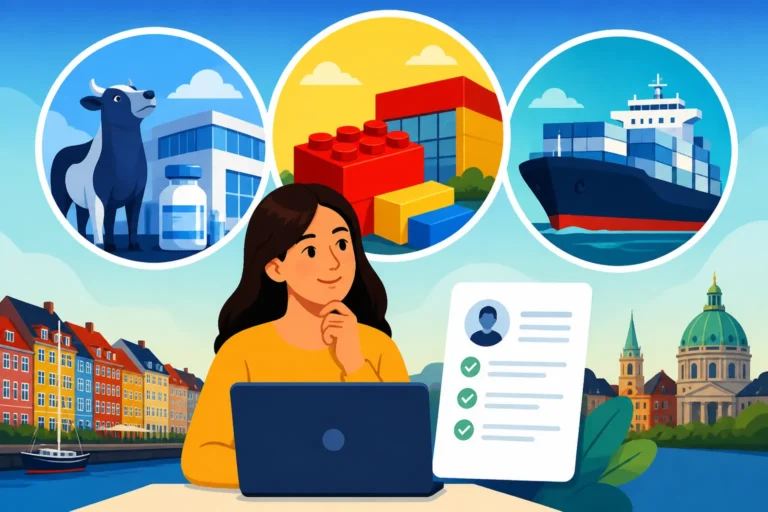
Oh, the romantic notion of living in Malmö with its slightly lower cost of living and charming vibe, all while enjoying the buzzing career opportunities of Copenhagen! It’s a dream many of us expats entertain, but let me tell you, navigating the practicalities of cross-border commuting between Sweden and Denmark is a journey filled with administrative twists and turns. This guide will meticulously break down the cross-border working rules, the unique tax implications, and all the nitty-gritty practicalities you need to master for this particular lifestyle.
The Allure and the Reality of Cross-Border Commuting
Living in one country and working in another can seem like the best of both worlds, especially when those countries are as closely linked as Sweden and Denmark via the iconic Øresund Bridge. Malmö, just a stone's throw across the Sound, often presents itself as a more affordable alternative to Copenhagen's notoriously high rents. But before you pack your bags and set up shop in Sweden, it’s crucial to understand the intricate realities that come with being a true Øresund commuter.
Why Malmö Often Appeals to Copenhagen Workers
For many expats, the decision to settle in Malmö while working in Copenhagen boils down primarily to economics. Housing costs in Malmö are generally lower than in the Danish capital, sometimes significantly so, offering more space for your money, especially if you’re moving with a family. Beyond the financial aspect, Malmö offers a distinct Scandinavian charm, a slightly slower pace of life, and a vibrant multicultural scene that can be very appealing. It's a city with its own character, often celebrated for its parks, art, and burgeoning culinary landscape. For those who appreciate a slightly different cultural flavor while still being within easy reach of a major European hub, Malmö presents a compelling option.
However, it's not just about rent. Groceries, certain services, and even dining out can sometimes be perceived as more budget-friendly in Sweden, depending on the current exchange rate and your spending habits. This perceived financial advantage can make the daily commute seem like a worthwhile trade-off for a better quality of life within your budget.
The Daily Grind: Commute Times and Bridge Dynamics
While Malmö is "just across the bridge," the daily commute is a significant factor that can't be underestimated. The Øresundståg trains are efficient, connecting Malmö Centralstation to Copenhagen Hovedbanegård (Central Station) in about 35-40 minutes. Add to that the time it takes to get to and from the stations on both sides, and you're realistically looking at an hour or more each way, twice a day. This means dedicating 2-3 hours of your day, every workday, purely to transit. That's a lot of time spent on a train, regardless of how comfortable it is.
The Øresund Bridge itself is a marvel of engineering, but it’s also a toll road for cars. As a train commuter, you won't directly pay the bridge toll, but it's factored into ticket prices. Be prepared for potential delays; while generally reliable, train services can be affected by everything from technical issues and track work to extreme weather conditions. These disruptions, even if infrequent, can significantly impact your schedule and add stress to your day. You'll need to develop a high tolerance for predictability in your routine, often relying on apps like Rejseplanen (the Danish public transport planner) to stay informed. To learn more about navigating the Danish public transport system, check out our guide on Public Transport in Denmark: Rejsekort, Trains, and Commuting.
Initial Setup Hurdles: CPR, Bank Accounts, and the Swedish Address
One of the biggest initial frustrations for anyone moving to Denmark is the "catch-22" of needing a Danish address for your CPR number, and a CPR number for almost everything else. When you’re living in Sweden but working in Denmark, this specific hurdle applies slightly differently.
If you are working for a Danish employer and paying taxes in Denmark, you will need a Danish tax number (SKAT ID) and likely a pseudo-CPR number (a "tax-CPR") if you don't actually reside in Denmark. However, if your employment contract is Danish, and you are working full-time in Denmark, you are generally subject to Danish social security and tax rules. This is where the complexities begin, and you must register with SKAT in Denmark, even if you remain officially registered as a resident in Sweden.
You'll also need a Danish bank account for your salary. Most Danish banks require a CPR number to open a full account, which you won't have if you're not resident in Denmark. However, special arrangements can sometimes be made for cross-border commuters or "limited tax liability" individuals. It's best to contact Danish banks directly and explain your situation from the outset. You’ll definitely need a NemKonto to receive your salary and any potential tax refunds from Denmark, and this needs to be linked to a Danish bank account. Our guide on NemKonto and MitID: The Core of Danish Digital Finance (2027) provides more insights into this essential system.
Navigating the Øresund Agreement and Danish Tax Rules
This is perhaps the most critical and often confusing aspect of cross-border commuting between Malmö and Copenhagen. The tax situation isn't as simple as "you pay where you live" or "you pay where you work." It's a nuanced dance governed by international agreements.
The Core of Cross-Border Taxation: The Øresund Agreement
The primary framework for taxing income for those who live in Sweden and work in Denmark (or vice-versa) is the Nordic Tax Treaty, specifically the "Øresund Agreement." This agreement stipulates that your employment income is generally taxed in the country where you perform the work. So, if you live in Malmö but commute daily to an office in Copenhagen, your salary will primarily be subject to Danish income tax.
However, there are exceptions. If you spend a significant portion of your working time in your country of residence (Sweden, in this case), for example, working from your home office in Malmö, a portion of your income might become taxable in Sweden. This often involves detailed record-keeping of your workdays. This complex division of tax responsibility means you'll typically be subject to both Danish and Swedish tax authorities, requiring careful attention to avoid double taxation – or worse, accidental tax evasion. It’s a situation where seeking expert advice, perhaps from services like Taxes for Expats, can be invaluable to ensure you're compliant in both countries.
Who Taxes What? Income, Social Security, and Deductions
As a commuter working in Denmark, your Danish employer will deduct A-Skat (income tax) and AM-bidrag (labor market contribution) directly from your salary, just like any other Danish employee. Your employer will also contribute to your Danish pension scheme (Arbejdsmarkedspension), making you part of the Danish social security system regarding employment-related benefits. For a deeper dive into Danish taxation, our article Taxes in Denmark Explained: A-Skat, AM-bidrag, and Marginal Rates is a great resource.
While your employment income is largely taxed in Denmark, your country of residence (Sweden) will still consider your global income for tax purposes. Sweden will then typically exempt the Danish-taxed income or provide a credit for taxes paid in Denmark to prevent double taxation. However, Swedish municipalities might still levy municipal tax on this income.
It's also vital to understand where your social security contributions go. Generally, if you work full-time in Denmark, you are covered by the Danish social security system. This means you will be entitled to benefits like sickness benefits (Sygedagpenge), maternity/paternity leave (Barsel), and unemployment benefits (Dagpenge from an A-kasse) according to Danish rules, not Swedish. However, if you lose your job, claiming unemployment benefits can become tricky as you live in one country and claim benefits from another.
Handling Your Danish Tax Card and Avoiding Surprises
When you start working in Denmark, you'll need to obtain a Danish tax card (skattekort) from SKAT. This tells your employer how much tax to deduct from your salary. The initial tax card will be based on your Forskudsopgørelse (preliminary tax assessment), which you'll need to fill out. This is a crucial document because it estimates your income and deductions for the year. Getting it right is essential to avoid paying too much or too little tax, which can lead to a nasty surprise when you receive your Årsopgørelse (annual tax assessment notice). If you underpay, you could face a Restskat (tax debt).
For commuters, accurately detailing your travel expenses between Malmö and Copenhagen on your Forskudsopgørelse is particularly important, as these are often deductible. The system is designed to prevent double taxation, but it relies on you providing accurate information to both tax authorities. For more on navigating this, our guide on Understanding SKAT: Forskudsopgørelse vs. Årsopgørelse Explained is highly relevant. Given the complexities, you might find that specialist advice from a firm like Taxes for Expats is not just helpful, but necessary to ensure you're compliant in both Sweden and Denmark.
| Aspect | Danish Resident Working in Denmark (Standard) | Swedish Resident Working in Denmark (Commuter) |
|---|---|---|
| Primary Tax Country | Denmark | Denmark (for work income) |
| Social Security | Danish system | Danish system (for work-related benefits) |
| Healthcare Access | Yellow Card (Sundhedskort) in Denmark | Swedish healthcare (primary residence) + EHIC for emergencies in Denmark |
| CPR Number | Yes | No (typically a SKAT ID/tax-CPR for work) |
| Bank Account | Danish NemKonto | Danish NemKonto (linked to Danish bank) and Swedish bank for living expenses |
| Unemployment Benefits | A-kasse (Danish) | A-kasse (Danish), but rules for cross-border can be complex |
| Main Currency | DKK | SEK (for living expenses), DKK (for work income) |
| Language | Primarily Danish | Swedish (daily life), Danish (work), English (expats) |
| Commute Costs | Internal public transport/car | Øresundståg (significant monthly cost) |
| Key Agreement | N/A | Nordic Tax Treaty (Øresund Agreement) |
Cross-Border Taxation Specifics
The specifics of Cross-Border Taxation: Working in Denmark but Living in Sweden dictate that if you work physically in Denmark, Denmark has the right to tax your income. However, there are rules around how many days you can work from your Swedish home before Sweden might claim some taxing rights. It's generally accepted that if you commute daily and primarily perform your duties in Denmark, your income is taxed there.
One important detail often overlooked is how pension contributions are treated. Contributions made by your Danish employer to a Danish pension scheme are taxed according to Danish rules, usually when they are paid out in retirement. This can have implications if you eventually move out of the Nordics or choose to cash out a pension, if allowed. Be mindful that special tax schemes like The Expat Tax Scheme (Forskerskatteordningen): The 27% Flat Tax Guide are generally only applicable to individuals who are fully tax-resident in Denmark and fulfill very specific criteria, which is usually not the case for a daily commuter living in Malmö.
Practicalities of Life and Work Across the Sound
Beyond the tax headache, the daily grind of living in one country and working in another brings a host of practical considerations that will shape your expat experience.
Commuting Logistics: Rejsekort, Pendlerkort, and Øresundståg
Your lifeline as an Øresund commuter will be the Øresundståg trains. These cross-border services run frequently, but the cost of a monthly pass, known as a Pendlerkort, is substantial. This pass allows unlimited travel within specified zones, covering both the Swedish Skåne region and the Danish capital region. Before committing, calculate the exact cost and factor it into your budget; it's a fixed, significant expense.
While you might still use a Rejsekort for travel within Copenhagen itself (or a supplementary pass), your main commuter ticket will be the Pendlerkort. Ensure you understand the zone system and what your pass covers. You'll need to swipe your card at validators on both sides of the border when crossing, even if it feels redundant with a monthly pass. For more information on using the Danish public transport system, refer to our comprehensive guide on Public Transport in Denmark: Rejsekort, Trains, and Commuting.
Healthcare and Social Security: Navigating Two Systems
This is where things can get particularly complicated. Since you are working in Denmark and contributing to the Danish social security system, you are typically entitled to certain Danish benefits, but your primary healthcare access is usually through your country of residence – Sweden.
- Healthcare: As a resident of Sweden, you primarily access healthcare through the Swedish system. However, thanks to EU regulations and Nordic agreements, you should be able to access medically necessary care in Denmark using your European Health Insurance Card (EHIC), which you would obtain from Sweden. This is for necessary treatment, not routine check-ups or GP visits. For emergencies in Denmark, you would go to a Danish emergency room, but generally, your primary point of contact for routine medical needs would be a Swedish GP. Our guide on Healthcare in Denmark for Foreign Residents: Complete System Guide (2027) explains the Danish system, and you'll find that having a Danish The Yellow Health Card (Sundhedskort): Your Key to Danish Healthcare is reserved for those officially registered as residents in Denmark.
- Social Security & Unemployment (A-kasse): Your contributions in Denmark mean you’re building up entitlements under the Danish social security system. This includes the right to join a Danish A-kasse (unemployment insurance fund) and accumulate rights to Dagpenge (unemployment benefits). However, if you become unemployed, the process of claiming benefits while living in Sweden can be administratively cumbersome, often involving coordination between Danish and Swedish authorities. It’s crucial to understand the rules from your chosen A-kasse and perhaps seek advice from them directly. Read more about this in Trade Unions and A-Kasse: Why Every Expat Must Understand Them.
Language: Danish, Swedish, and English
While English is widely spoken in both Copenhagen and Malmö, immersing yourself in either Danish or Swedish will significantly enhance your experience. Your workplace in Copenhagen might operate in English, but daily life interactions in Denmark will be smoother with some Danish. Similarly, living in Malmö means engaging with Swedish in supermarkets, government offices, and local community.
Many cross-border commuters find themselves learning a bit of both, or at least understanding the similarities and differences. Learning Danish is not just about communication; it's a huge step towards social integration and understanding the culture. Platforms like iTalki can be fantastic for finding online tutors to practice Danish or Swedish, allowing you to fit lessons into your busy commuting schedule. Even basic phrases go a long way. Our post on Learning Danish: Sprogcenter, FVU, and the Importance of the Language provides excellent resources for starting your language journey in Denmark.
Key Considerations and Potential Pitfalls
Cross-border living isn't just about financial gains; it comes with unique challenges that require forethought and robust planning.
Double Residency vs. Single Residency: What Are You?
This is a critical distinction. Are you a "pendler" (commuter) with a primary residence in Sweden and a workplace in Denmark, or are you trying to maintain a form of dual residency? For tax and social security purposes, you will almost always be considered resident in one place (Sweden, in this case) and working in another (Denmark). Trying to juggle two official residencies for perceived advantages can lead to serious legal and financial complications. Clarity on your official "residence" is paramount. Your primary residence dictates where you have full access to public services like schools, healthcare, and often, political voting rights.
Impact on Family Reunification and Long-Term Plans
If you plan to bring family to Denmark or have them join you later, your cross-border status can complicate matters. Family reunification rules are based on your country of residence. If you live in Sweden, your family reunification process will be governed by Swedish immigration laws, even if your income is from Denmark. This can create a disconnect where your employment status (Danish) doesn't directly support your family's residence status (Swedish). It's crucial to consult both Swedish and Danish immigration authorities or legal experts if family reunification is part of your long-term plan.
The True Cost of Living: Beyond Rent
While rent in Malmö might be lower, it's vital to consider the total cost of living. Your daily commute expenses are significant and non-negotiable. The exchange rate between SEK and DKK can fluctuate, impacting your spending power in Denmark. While some things might be cheaper in Sweden, others, like certain electronics or imported goods, might not be. You'll effectively be managing two budgets in two currencies. Factor in costs for utilities, internet, and groceries in Sweden, and then think about your discretionary spending in Denmark. Sometimes, the savings on rent are entirely eaten up by commute costs and currency exchange differences.
Administrative Burden and Meticulous Record Keeping
Prepare for a higher administrative burden than if you were simply living and working in one country. You'll have tax obligations in two countries, potentially social security claims across borders, and the need to keep detailed records of everything from your workdays (especially if you work from home occasionally) to your travel expenses. Missing a deadline or failing to report income to either authority can lead to fines or tax penalties. Keeping meticulous records and seeking professional advice from experts like Taxes for Expats will save you a lot of stress (and potentially money) in the long run.
The Øresund region offers unique opportunities, but its cross-border nature demands a proactive and informed approach. With careful planning, you can certainly make the Malmö-Copenhagen commute work for you.
Disclaimer
Please remember that this guide provides general information and insights based on common experiences and publicly available knowledge. Tax laws, social security regulations, and immigration rules are complex and subject to change. This content should not be considered legal, financial, or professional advice. Always consult with qualified professionals, such as tax advisors, immigration lawyers, or relevant government authorities in both Denmark and Sweden, for advice tailored to your specific situation.