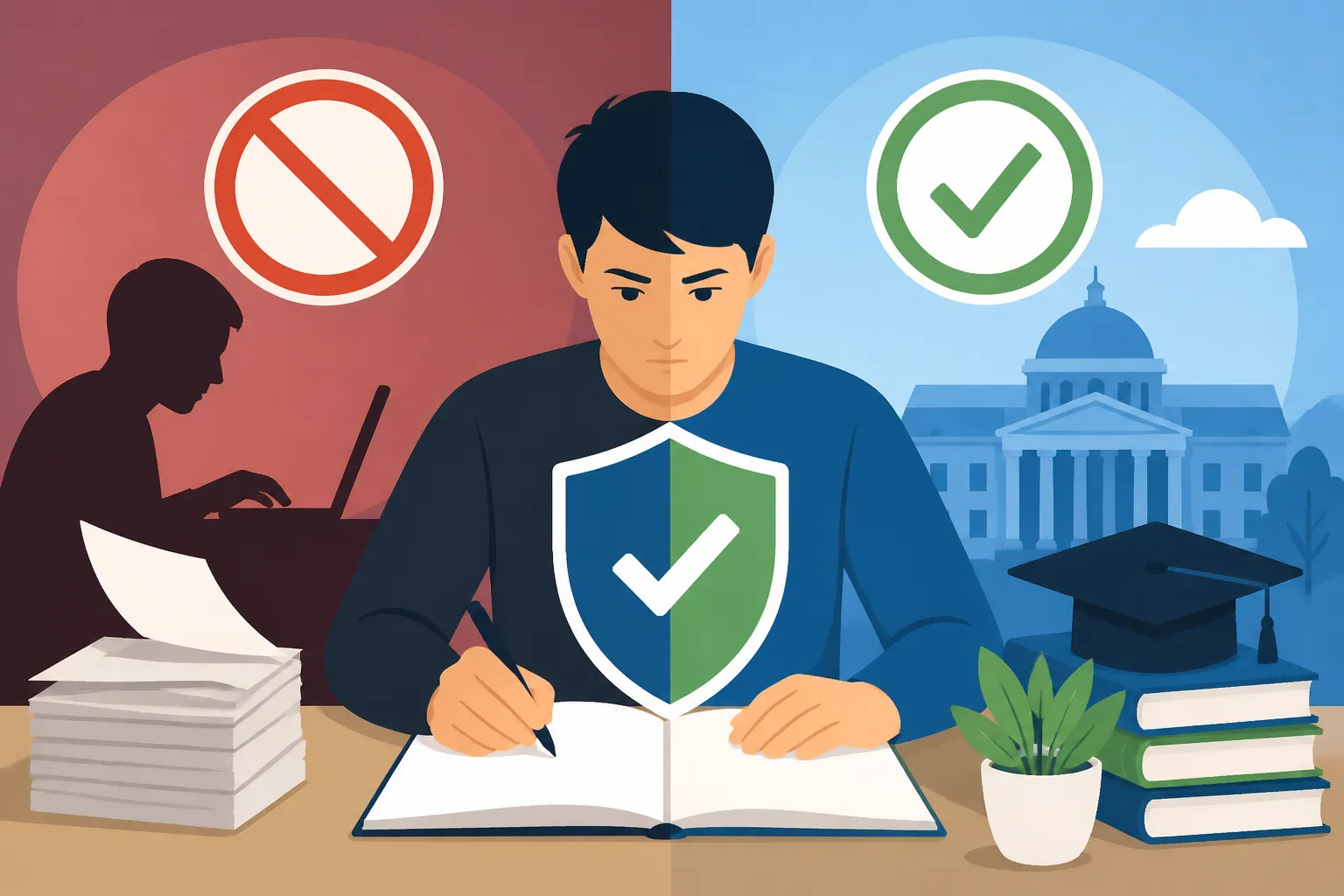
Plagiarism and Academic Integrity: Strict Rules in Danish Universities
Moving to a new country to study is thrilling, but adjusting to a different academic culture can throw even the most conscientious student for a loop. Many expats arriving in Denmark, especially from academic systems with varying standards, find themselves scratching their heads over the rigorous expectations for academic integrity. It’s not just about avoiding obvious copy-pasting; the Danish system operates on a deep-seated trust and a zero-tolerance policy for anything that even hints at intellectual dishonesty. This guide is here to shed light on these strict rules, help you understand the nuances, and arm you with the knowledge to thrive academically in Denmark without accidentally falling afoul of the system.
Understanding Academic Integrity in Denmark: It's Not Just About Copy-Pasting
When you embark on your academic journey in Denmark, whether it's at Aarhus University, the University of Copenhagen, or any of the other fantastic institutions, you'll quickly discover that the concept of academic integrity runs deep in the educational fabric. It's not just a set of rules; it's a fundamental part of the learning environment, built on trust and a collective commitment to honest intellectual pursuit. This might feel different from what you're used to, particularly if your home country's system focused more on rote learning or less stringent citation practices. It’s a cultural shift as much as an academic one, and understanding this underlying ethos is your first step towards success.
The Danish University Ethos: Trust and Responsibility
Danish universities foster an environment of high autonomy and self-directed learning. Professors often act more as facilitators than strict overseers, expecting students to take significant personal responsibility for their work and learning process. This trust extends to academic integrity: it's assumed you will produce original work and properly credit any sources you use. The system is designed to empower you, but with that power comes a serious obligation to uphold ethical standards. This is crucial for maintaining the credibility of your degree and the reputation of the institution. It is also tied into the broader Danish societal values of honesty and collective responsibility, which you'll encounter in many other aspects of life here, from how you manage your finances to understanding your Taxes in Denmark Explained: A-Skat, AM-bidrag, and Marginal Rates or even just the daily interactions at your local supermarket.
This emphasis on trust means that when academic dishonesty occurs, it's often viewed as a significant breach of that trust, impacting not just your personal academic standing but potentially the integrity of the entire academic community. This isn't meant to intimidate you, but rather to highlight the importance of truly internalizing these values. It means developing a meticulous approach to your research, note-taking, and writing, ensuring that every idea that isn't your own is clearly attributed. It's about developing the skills to critically engage with existing knowledge and then build upon it with your unique insights, rather than simply regurgitating information.
Defining Plagiarism Beyond the Obvious
Many international students arrive with a basic understanding of plagiarism as direct copying without citation. While that's certainly true, Danish universities often have a much broader definition that encompasses various forms of academic misconduct. It's not just about verbatim text; it extends to ideas, data, structures, and even arguments. For instance, paraphrasing someone's work too closely without proper attribution, even if you change a few words, can still be considered plagiarism. Self-plagiarism, where you reuse your own previously submitted work without explicit permission or proper citation, is another common pitfall. This might come as a surprise if your previous academic experience allowed for recycling portions of your old assignments, but in Denmark, each submission is expected to be a fresh, original piece of work for that specific context.
Consider a scenario where you've found an excellent framework or theoretical model in a published paper. If you adapt this framework for your own analysis but don't clearly state its origin and explain how you've modified it, you could be risking a charge of plagiarism. Similarly, if you work on a group project, and one member copies material, all members of the group can be held responsible if they submitted it together, underscoring the importance of understanding the rules around Group Work in Danish Universities: Why It Forms 50% of Your Grade. The expectation is that you demonstrate critical thinking and synthesis, not just information retrieval. Understanding these subtle distinctions is paramount to avoiding unintentional errors and ensuring your academic integrity remains unblemished throughout your studies in Denmark.
The Consequences of Plagiarism: What Happens When You're Caught
Falling afoul of academic integrity rules in a Danish university is not something to take lightly. The consequences can range from a minor slap on the wrist to severe, life-altering repercussions, potentially impacting your student status, future career prospects, and even your visa situation. Many international students, unaware of the strictness of the system, are often shocked by the severity of the penalties, underscoring the critical need for vigilance and adherence to academic honesty.
Detection Methods and University Procedures
Danish universities employ sophisticated methods to detect plagiarism. It's not just professors manually scanning papers anymore; most institutions utilize advanced plagiarism detection software, such as Turnitin or Ouriginal (formerly Urkund), which compare your submitted work against a vast database of academic papers, online sources, and previously submitted student assignments. This means that even if you try to disguise plagiarism by changing a few words or phrases, the software can often identify patterns and similarities that indicate unoriginal work. Every paper you submit, from short essays to your master's thesis, will likely pass through these digital gatekeepers.
Once a suspicion of plagiarism arises, whether flagged by software or a human reader, a formal procedure is initiated. This typically involves a detailed investigation by a dedicated committee or board within the university. You will almost certainly be called in for an interview, given the opportunity to explain your work and defend yourself. This process is taken very seriously, often involving multiple stages of review to ensure fairness. It’s a structured and formal process, so understanding your rights and the university's protocol is essential. During this time, it is vital to cooperate fully and provide any documentation or explanations requested, as transparency can sometimes mitigate the severity of a misunderstanding.
Penalties and Their Long-Term Impact
The penalties for plagiarism in Danish universities vary depending on the severity and nature of the offense, as well as whether it’s a first-time or repeat offense. For minor cases, you might receive a warning, a failing grade for the assignment, or be required to resubmit the work. However, more serious or repeated instances can lead to much harsher outcomes. These can include suspension from your program for a period, typically one or two semesters, or even permanent expulsion from the university. Such an outcome could devastate your academic career, making it extremely difficult to enroll in another institution, especially within Denmark or the EU.
Beyond the immediate academic repercussions, there are significant long-term implications, especially for international students. An expulsion or suspension can affect your residence permit, as your student visa is tied to your enrollment status. If you are no longer an active student, you may lose your right to reside in Denmark, potentially leading to deportation. This could complicate future attempts to Studying in Denmark: Admissions, Student Visas, and Campus Life or work in Denmark or other Schengen countries. Furthermore, a mark of academic dishonesty on your permanent record can severely hinder your career prospects, making it difficult to secure employment, especially in fields that value integrity, or pursue further education. It’s a stain that can be hard to remove, which is why absolute adherence to academic integrity is non-negotiable from day one.
Strategies for Upholding Academic Integrity and Avoiding Plagiarism
Navigating the academic landscape in Denmark requires not only an understanding of the rules but also proactive strategies to ensure your work is always original and properly attributed. Developing strong academic habits and utilizing available resources will be your best defense against unintentional plagiarism and will set you up for success in your studies. It's about building a robust workflow that integrates integrity at every stage.
Proper Citation and Referencing Techniques
The cornerstone of academic integrity is accurate and consistent citation. Danish universities typically adhere to internationally recognized citation styles, such as APA, MLA, Chicago, or Harvard, though the specific style often depends on your field of study and the particular university or department. It is absolutely crucial to familiarize yourself with the required citation style for each of your courses and apply it rigorously. This means not only citing direct quotes but also paraphrased ideas, summaries of others' work, data, images, and any other information that did not originate from your own independent thought or research.
Don't just think of citations as an annoying requirement; view them as a way to engage in an academic conversation, acknowledging the contributions of others while strengthening your own arguments. Tools like Zotero, Mendeley, or EndNote can be invaluable for managing your sources, generating citations, and creating bibliographies automatically. Many universities offer workshops or online guides on proper citation, and taking advantage of these resources can save you a lot of headaches later on. Remember, a common mistake is citing sources in the bibliography but failing to include in-text citations, or vice versa. Both are essential for demonstrating where your ideas come from.
| Type of Plagiarism | Description | Perceived Severity | How to Avoid |
|---|---|---|---|
| Direct Copying | Copying text word-for-word without quotation marks or citation. | High | Always use quotation marks for verbatim text and provide a full citation. Prioritize paraphrasing and synthesizing. |
| Paraphrasing Too Closely | Changing a few words in a sentence or paragraph while retaining the original structure and meaning, without citation. | Medium-High | Read, understand, then put the idea away and write it in your own words. Compare with the original to ensure significant difference. Always cite. |
| Mosaic Plagiarism | Blending quoted text with your own words without proper attribution or using fragments of someone else's work within your own. | Medium-High | Focus on understanding and integrating source material through synthesis. Use clear citations for every idea, not just quotes. |
| Self-Plagiarism | Submitting work you've previously used for another course or publication without explicit permission from your current instructor and proper citation. | Medium | Always create original work for each assignment. If reusing previous work is permitted, ensure you clearly state it and cite your own prior work. |
| Incorrect Citation | Providing incomplete, inaccurate, or fabricated citations. | Low-Medium | Double-check all citations against the source. Use reference management tools. |
| Ghostwriting/Contract Cheating | Having someone else write your paper or purchasing an essay. | Extremely High | Never engage in any form of contract cheating. It's a fundamental breach of trust and will lead to expulsion. |
Utilizing Support Systems and Tools
You are not alone in navigating the complexities of academic integrity. Danish universities offer a wealth of support systems designed to help students, especially international ones, adapt to the academic culture. Most universities have dedicated academic advisors, writing centers, or study coaches who can provide guidance on everything from essay structure to correct citation practices. Don't be shy about reaching out to them if you're unsure about any aspect of your academic work. They are there to help you learn and succeed.
Furthermore, many institutions provide access to writing workshops or online tutorials that specifically address plagiarism and academic writing standards. Language centers, often linked to the universities or independent organizations like those offering Free Danish Classes for Expats: Eligibility and the 5-Year Window, can also help you refine your academic English, which can indirectly help prevent plagiarism by improving your ability to articulate complex ideas in your own words. If you find yourself struggling with expressing ideas in English, platforms like iTalki can be a great way to practice conversational English or even academic English with a tutor, improving your fluency and confidence in articulating your thoughts without relying too heavily on source wording. Learning to articulate your thoughts clearly and confidently is a powerful tool against accidental plagiarism.
Developing Effective Study Habits
Ultimately, the best way to uphold academic integrity is to cultivate effective study habits that prioritize genuine learning and critical engagement. This means more than just reading; it involves active note-taking where you differentiate between your own thoughts and ideas from sources, summarizing rather than copying, and planning your assignments well in advance. Breaking down large assignments into smaller steps—research, outline, first draft, revision, and proofreading—can help you manage the workload and ensure you have enough time to properly integrate and cite your sources.
Avoid the temptation to cut corners, especially under pressure. If you're feeling overwhelmed, speak to your professor or an academic advisor. They can offer extensions or guidance before you resort to desperate measures that could jeopardize your academic standing. Remember, your time in a Danish university is an opportunity for personal and intellectual growth. Embrace the challenge of original thought, rigorous research, and honest academic practice, and you'll not only earn your degree with pride but also develop invaluable skills that will serve you throughout your career. Whether you are aiming for a Post-Graduation Job Search: Using the Establishment Card (Etableringskort) or exploring Student Jobs and Internships: Bridging University and Career in Denmark, a clean academic record is your best asset.
Disclaimer
The information provided in this guide is intended for general informational purposes only and does not constitute legal or academic advice. While we strive to keep the information up-to-date and accurate, academic regulations and university policies can change. Always refer to your specific university's official guidelines, student handbook, or academic integrity policy for the most current and authoritative information. If in doubt, consult with your academic advisor or course instructor.