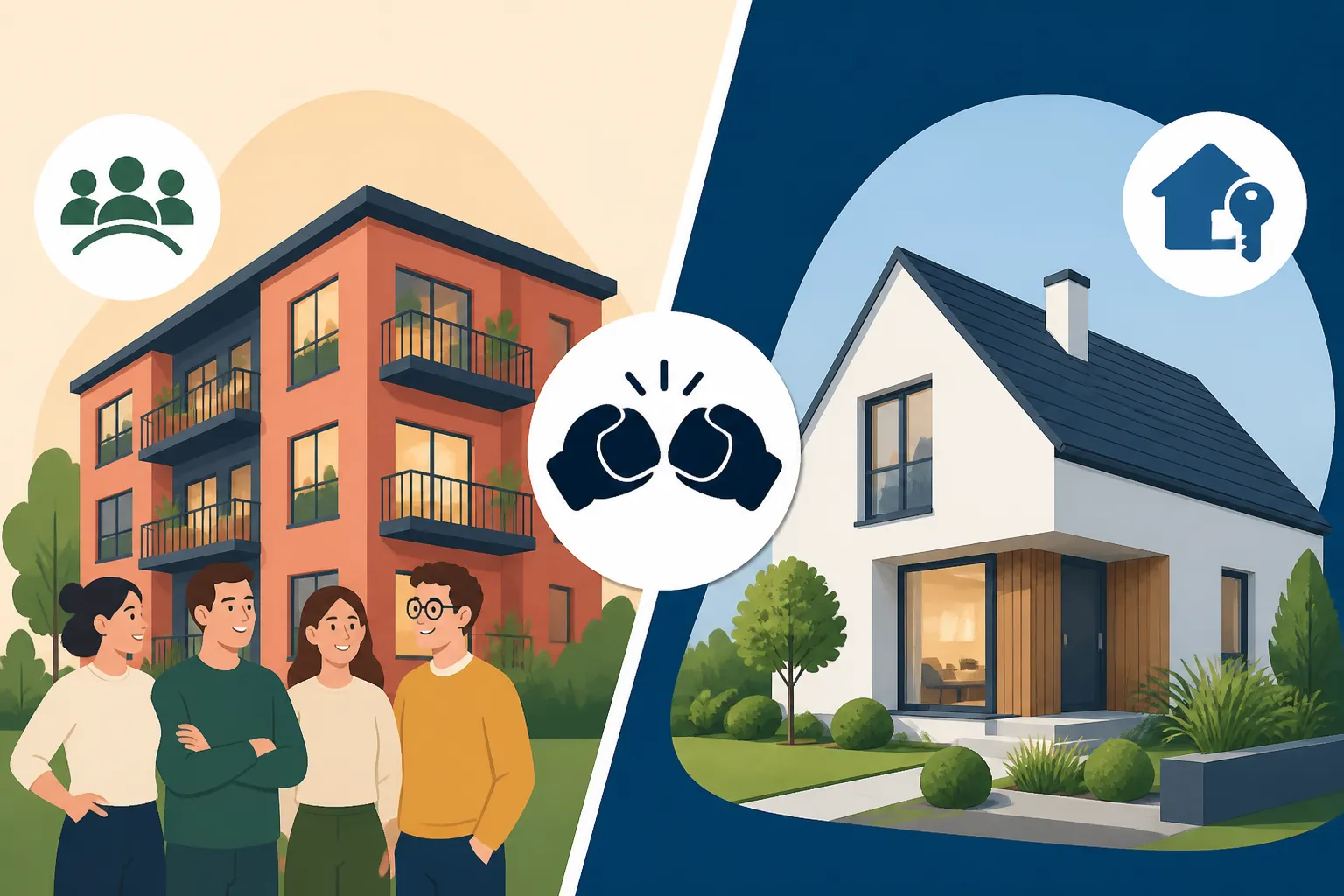
Andelsbolig (Co-operative Housing) vs. Ejerbolig (Owner-occupied)
Oh, the Danish housing market! If you've been here for any length of time, you've probably already navigated the maze of renting an apartment, dealing with deposits, and figuring out why your new place came without a single light fixture. But once you settle in, the idea of truly putting down roots, of owning a piece of this charming, sometimes perplexing, country starts to bubble up. And that's when you hit the next level of the Danish housing puzzle: understanding the fundamental difference between an Andelsbolig and an Ejerbolig. This guide is here to untangle those concepts, explore the nuances of each, and help you figure out which path makes the most sense for your expat life in Denmark.
Demystifying Danish Property Ownership for Expats
When you first arrive in Denmark, the immediate goal is usually just to find somewhere to live. You scour rental platforms, sign contracts filled with unfamiliar jargon, and probably just breathe a sigh of relief when you get a roof over your head. But after a while, many of us start dreaming bigger. We want a sense of permanence, the ability to paint a wall without permission, or just to stop paying someone else's mortgage. That's where the journey into Danish property ownership begins, and it quickly becomes apparent that it's not a straightforward "buy a house, own a house" scenario like in many other countries.
The Initial Shock: Moving Beyond Rentals
Let's be honest, the rental market in Denmark is a beast. High deposits, often three months' rent plus three months' prepaid rent, can feel like an entire down payment in itself. Then there are the clauses about moving out 14 days before your lease officially ends, or the infuriating "nyistandsat" (newly renovated) demands that can eat away at your deposit faster than a Danish pastry disappears from the breakfast table. We've all been there, wondering if we'll ever see our deposit again, or why the concept of built-in closets is so foreign here.
It’s this very landscape that often pushes expats to consider ownership. You crave stability, control over your living space, and the feeling that your monthly payments are actually building your equity, not just lining a landlord's pockets. The frustrations of the rental world, from dealing with unresponsive landlords to the sheer cost of constantly moving, become a powerful motivator to explore something more permanent. Indeed, many of us turn to temporary solutions like those offered by platforms like Spotahome to bridge the gap between leases or while waiting for a more permanent solution to materialize. It's a pragmatic approach to a market that doesn't always make things easy for newcomers.
Why "Buying" Isn't Always Straightforward Here
In many parts of the world, buying property means one thing: you own the building, the land, and everything in it (within legal limits, of course). In Denmark, however, it's not quite so simple. You'll hear two main terms thrown around: Andelsbolig and Ejerbolig. For someone coming from a country with a more traditional real estate market, this distinction can be utterly baffling.
An Ejerbolig is what most foreigners understand as traditional ownership – you own the physical property and the rights that come with it. But then there’s the Andelsbolig, which is a cooperative housing model, and it's far more common and integrated into the Danish housing fabric than you might expect. It's not just a niche thing; it's a significant part of the housing landscape, especially in popular urban areas. For many expats, the sheer complexity of this dual system, coupled with the language barrier and different legal frameworks, can be a major hurdle. It’s not just about finding a place; it's about understanding what kind of place you're actually acquiring and the long-term implications of that choice. This is where getting the right advice and having a clear understanding of your options becomes absolutely critical.
Andelsbolig: The Co-operative Conundrum
When Danes talk about "buying" an apartment, very often they're referring to an Andelsbolig. It's a unique concept that can be difficult for foreigners to grasp, as it's not quite like owning, but it's certainly more than just renting. It represents a different philosophy of homeownership, rooted in community and shared responsibility.
What Exactly Is an Andelsbolig?
At its core, an Andelsbolig means you're buying a share in a co-operative housing association (an andelsforening) that collectively owns an entire property – typically an apartment building, but sometimes a row of houses. You are not buying the specific apartment unit itself; rather, you are purchasing the right to occupy a particular unit within that building, along with a share of the association's assets and liabilities. Think of it like this: you become a co-owner of the whole pie, and your apartment is your assigned slice that you get to live in.
This association is a democratic entity, managed by its members (the andelsbeboere). This means you'll have a say in how the building is run, from deciding on major renovations to setting the monthly fees, but you'll also be bound by the collective decisions. There are annual general meetings where important decisions are made, budgets are approved, and board members are elected. This communal aspect is a huge part of the Andelsbolig culture; you're not just buying a home, you're joining a community with shared responsibilities for the property's upkeep and financial health. This can be a wonderful thing if you value community, but it also means less individual autonomy compared to traditional ownership.
Financial Realities and Restrictions
The financial structure of an Andelsbolig is where it truly diverges from traditional ownership and can be a significant point of confusion for expats.
Firstly, the initial purchase price, known as the indskud, is generally lower than what you'd pay for an Ejerbolig of comparable size and location. This lower entry barrier is one of the main attractions of Andelsbolig for many Danes, making homeownership more accessible, especially in expensive urban areas. However, don't let the lower indskud fool you into thinking it's cheaper overall without delving deeper.
Secondly, instead of paying a traditional mortgage directly on your apartment, you pay a monthly housing fee, or boligafgift, to the co-operative association. This fee covers your share of the association's collective expenses, which include the association's mortgage (the fælleslån for the entire building), property taxes, insurance, maintenance, and common utilities. It's crucial to understand that if the association has a large fælleslån, a significant portion of your boligafgift will go towards servicing that debt. The health of the association's finances, therefore, directly impacts your monthly costs and the value of your share.
Valuation rules are another critical difference. The price at which you can sell your Andelsbolig share is often capped by the association's bylaws. This cap is typically based on a public property assessment (offentlig ejendomsvurdering), an internal assessment (e.g., based on the original cost with inflation adjustment), or a professional valuation. This means that while an Andelsbolig can still appreciate in value, the growth might be more controlled and less volatile compared to an Ejerbolig, depending on the association's specific rules. This is important to consider for your long-term investment strategy.
Lastly, and perhaps most crucially for financing, obtaining a traditional mortgage (realkreditlån) for an Andelsbolig is generally not possible. Because you don't own the physical apartment, you cannot use it as collateral for a mortgage in the same way you would an Ejerbolig. Instead, you typically take out a personal bank loan (banklån) for the indskud. These bank loans often come with higher interest rates and shorter repayment periods than realkreditlån, which can significantly impact your monthly expenses and overall cost of ownership. This financing hurdle is often a major wake-up call for expats used to easily accessible, low-interest mortgages.
The Pros and Cons from an Expat Perspective
Choosing an Andelsbolig comes with a unique set of advantages and disadvantages that expats should carefully weigh.
Pros:
- Lower Entry Price: The initial indskud is typically much lower than the down payment required for an Ejerbolig, making it more accessible if your savings aren't massive. This can be appealing if you're keen to get onto the property ladder without the huge upfront capital.
- Often Attractive Locations: Many Andelsboliger are located in desirable urban areas or older, charming buildings that might be prohibitively expensive as Ejerboliger.
- Community and Shared Responsibility: You become part of an active community. Decisions are made democratically, and larger maintenance issues are handled collectively, which can mean less individual headache for major repairs. You might find a real sense of belonging within the andelsforening.
- Predictable Monthly Costs (Usually): While the boligafgift can change, it's generally a predictable expense that covers many of the usual homeowner costs like property tax and external maintenance.
Cons:
- Less Autonomy and Stricter Rules: You don't own the apartment outright, so you're subject to the association's rules and bylaws. This can mean restrictions on renovations, pet ownership, or even what color you can paint your front door. It requires a willingness to compromise and participate in collective decision-making.
- Slower Capital Appreciation Potential: Due to valuation caps, the potential for significant capital gains can be limited compared to Ejerboliger. This is crucial if your primary goal is investment and wealth building.
- Harder and More Expensive Financing: As mentioned, you typically need a personal bank loan, which has higher interest rates and shorter repayment terms than traditional mortgages. This means your monthly payments might be higher for the loan portion, despite the lower initial entry price.
- Reliance on Association's Health: The financial stability of the entire andelsforening directly affects your investment. If the association takes on too much collective debt (a large fælleslån) or is poorly managed, it can impact the value of your share and increase your boligafgift. It's vital to meticulously review the association's finances before buying.
- Resale Restrictions: The association might have rules about who you can sell to (e.g., internal waiting lists) or how quickly you can sell, which can complicate things if you need to move quickly.
- Understanding is Key: For expats, thoroughly understanding the legal and financial intricacies of an Andelsbolig can be incredibly challenging without expert advice. Make sure you get English translations of all relevant documents and consult with a lawyer specializing in property.
- Less Recognized Internationally: The Andelsbolig model is quite specific to Denmark and some other Nordic countries. If you envision moving back to your home country or elsewhere, explaining this type of "ownership" and its associated documentation to foreign banks or authorities can be difficult.
When you're deeply entrenched in the property hunt, shuttling between viewings and poring over obscure Danish financial reports, ensuring you have reliable mobile data is a lifesaver. Trying to coordinate with real estate agents or translate documents on the fly requires constant connectivity, and services like Airalo can be incredibly handy for staying online without worrying about expensive roaming charges or hunting for local SIM cards. It’s a small detail, but believe me, good connectivity reduces a lot of stress during such a demanding process.
Ejerbolig: The Traditional Ownership Dream
If the Andelsbolig feels a bit like shared custody, then the Ejerbolig is the full, undisputed ownership you might be more familiar with. This is where you get to truly call the shots, within the usual limits of local planning and building regulations, of course.
What Defines an Ejerbolig?
An Ejerbolig is property that you own outright. This can be an apartment (known as an ejerlejlighed), a single-family house (villa), a terraced house (rækkehus), or even a holiday home (fritidshus). When you buy an Ejerbolig, you are purchasing the physical building and, in the case of a house, the land it stands on. For an ejerlejlighed, you own your specific apartment unit, and you also own a share of the common areas of the building (like stairwells, roofs, and basements) as part of a smaller co-operative of owners (ejerforening). This ejerforening manages the shared elements of the building, much like an Andelsbolig association, but with a different financial and legal structure.
The key distinction is that with an Ejerbolig, the property itself is registered in your name as the legal owner. This gives you significant rights and responsibilities. You have the freedom to renovate, decorate, and generally do as you please with your private space, provided you adhere to local planning laws and, for apartments, the bylaws of the ejerforening regarding common areas. This sense of complete ownership is a major draw for many expats who want the full, unadulterated "my home is my castle" experience.
Financial Commitments and Mortgage Magic
The financial landscape for an Ejerbolig is typically more straightforward and aligns more closely with international property markets, though with Danish specifics.
Firstly, the purchase price for an Ejerbolig is generally higher than for a comparable Andelsbolig. This means a significantly larger upfront investment. However, this higher cost is often offset by the availability of traditional mortgage financing.
This is where the "mortgage magic" comes in: realkreditlån. These are typically long-term loans (up to 30 years) with significantly lower interest rates than personal bank loans, secured against the value of the property itself. In Denmark, realkreditlån usually cover up to 80% of the property's value. The remaining amount, including the required minimum 5% down payment, is typically financed through a bank loan (banklån) or your own savings. So, buying an Ejerbolig usually involves a combination of your own cash, a bank loan, and a realkreditlån. This structure provides a more stable and financially advantageous way to finance a property compared to the Andelsbolig model.
Beyond the purchase price and financing, you'll also be responsible for various property taxes. These include ejendomsværdiskat (property value tax), which is a tax on the value of the property, and grundskyld (land tax), a tax on the value of the land. These taxes are typically paid annually or semi-annually and contribute to the ongoing costs of ownership. For ejerlejligheder, you'll also pay a monthly fee to the ejerforening for the upkeep of common areas, building insurance, and sometimes heating or water, similar to the boligafgift in an Andelsbolig, but usually without a large underlying collective mortgage.
The Ups and Downs for Foreigners
For many foreigners, the Ejerbolig model is much easier to understand and offers benefits that align with common expectations of homeownership.
Pros:
- Full Ownership and Autonomy: You own the property outright, giving you more freedom to make changes, renovate, and personalize your home without needing the approval of an entire association (beyond typical building permits or ejerforening rules for shared elements). This is a huge psychological benefit for those who cherish independence.
- Greater Potential for Capital Appreciation: Historically, Ejerboliger in desirable areas have offered stronger capital appreciation. While no investment is guaranteed, the market value is generally less restricted than with Andelsboliger, allowing for greater potential returns on your investment over time.
- Easier, Cheaper Financing: Access to realkreditlån means lower interest rates and longer repayment periods, making the monthly costs of financing more manageable for the bulk of the loan. This is a significant financial advantage.
- Clearer Resale Process: The resale process is generally more straightforward and market-driven, allowing for potentially quicker sales and transparent pricing based on demand.
- Internationally Recognized Asset: An Ejerbolig is a tangible asset that is widely understood as real property ownership across the globe, which can simplify matters if you ever need to use it as collateral internationally or explain your assets abroad.
Cons:
- Significantly Higher Entry Costs: The purchase prices are typically much higher, requiring a larger down payment and greater overall financial commitment upfront. This can be a substantial barrier for many expats.
- Full Responsibility for Maintenance: While you have freedom, you also bear full responsibility for all maintenance, repairs, and renovations within your property. For houses, this includes the roof, foundation, garden, and exterior. For apartments, the ejerforening handles common areas, but you're solely responsible for your unit's interior.
- Higher Property Taxes: As a direct owner, you are directly liable for ejendomsværdiskat and grundskyld, which can add up, particularly for higher-value properties.
- Market Fluctuations: While there's potential for greater appreciation, Ejerboliger are also more exposed to market downturns and fluctuations, meaning the value could decrease.
When you're comparing the costs of potential Ejerbolig properties against the steep prices of Danish rentals, it's easy to feel the pinch. Many expats initially settle for short-term rentals, perhaps through platforms like Spotahome, to gain time and experience the market before committing to such a large purchase. This strategy allows you to get a feel for different neighborhoods and what your money truly buys, rather than rushing into a decision that might not be right for your long-term plans.
Navigating the Purchase Process: What Expats Need to Know
Regardless of whether you choose an Andelsbolig or an Ejerbolig, the Danish property purchasing process has its own quirks and crucial steps you need to be aware of. It's not just about finding a home you love; it's about navigating the legal, financial, and administrative hurdles that can often feel like an Olympic event.
Legalities and Language Barriers
The Danish legal system for property transactions is thorough, but it can be incredibly dense, especially when you're dealing with it in a foreign language. This is why having competent, English-speaking professional help is not just a luxury, but an absolute necessity.
Your first port of call should be a boligadvokat (housing lawyer). They are your advocate throughout the process, ensuring your interests are protected. They will review all documents, including the købsaftale (purchase agreement), the association's bylaws (for Andelsbolig), or the ejerforening's documents (for Ejerlejlighed). They'll also check for any hidden debts, legal restrictions, or other red flags. Do not skimp on this; a good lawyer can save you from costly mistakes down the line.
For Ejerboliger, a few key documents are essential:
- Købsaftale: This is the core purchase agreement. Your lawyer will review it for any clauses that might put you at a disadvantage. It's often signed with a conditional clause allowing your lawyer to approve it.
- Tilstandsrapport (Condition Report): This report details the structural and material condition of the property. It's optional for sellers but if present, usually allows you to take out ejerskifteforsikring.
- El-installationsrapport (Electrical Report): Similar to the condition report, but for electrical installations.
- Energimærke (Energy Label): Rates the property's energy efficiency.
- Ejerskifteforsikring (Change of Ownership Insurance): This is a specific insurance that covers hidden defects in the property for a period (usually 5-10 years) that were not mentioned in the condition report. Your lawyer will advise on whether to get it, and who pays for it (often split with the seller).
Crucially, in Denmark, buyers have a 6-day cooling-off period (fortrydelsesret) after signing the purchase agreement, during which they can withdraw from the purchase for a small fee (1% of the purchase price). This is your final window to ensure everything is in order and you're comfortable proceeding. Your lawyer's final approval should ideally happen within this window. Don't be afraid to use it if something feels off.
Financing Hurdles and Bank Expectations
Securing financing is often the most stressful part of the property journey for expats. Danish banks have specific criteria, and your recent arrival or lack of Danish credit history can sometimes make things more complex.
For an Ejerbolig, you generally need a minimum 5% cash down payment, with banks often preferring around 15-20%. The remaining 80% is typically covered by a realkreditlån and a banklån. Banks will assess your income, employment stability (a permanent contract is a big plus), and your overall financial situation. They also look at your debt-to-income ratio and whether you have a consistent payment history in Denmark (even if it's just paying your bills on time). If you're a new expat, they might require a larger down payment or a longer period of stable income history in Denmark before approving a loan. The process for getting a mortgage can be lengthy, so start discussions with your bank early.
For an Andelsbolig, as discussed, traditional realkreditlån are generally not available. You'll typically need a banklån to cover the indskud. Banks will still assess your financial stability, but the loan terms (interest rates, repayment period) will often be less favorable. Furthermore, the bank will scrutinize the andelsforening's finances closely, including their fælleslån and overall economic health, as this affects the security of their loan to you. A financially robust association makes it easier to get a loan.
It's also worth noting that getting a NemKonto and MitID: The Core of Danish Digital Finance (2027) set up is fundamental to this entire process, as all official communications and financial transactions will hinge on these digital tools. You can't really do anything significant without them.
Finding Your Danish Home
The actual search for a property is where many expats discover just how competitive and opaque parts of the Danish market can be.
For Ejerboliger, the process is fairly standard. You'll browse major property portals like Boligsiden.dk, EDC, Nybolig, and Home. These sites aggregate listings from various real estate agents, making it easy to compare properties. You contact the real estate agent for viewings, and they act as the seller's representative.
Finding an Andelsbolig, however, can be a different beast entirely. Many Andelsboliger are not publicly listed on major portals. Instead, they often sell through internal waiting lists within the association, private networks, or word-of-mouth. Some andelsforeninger have long waiting lists, sometimes requiring years of membership or a local connection to even be considered. There are websites that list Andelsboliger for sale (like Andelsportal.dk), but often, securing one feels more like an insider's game. This can be incredibly frustrating for expats who lack those established networks.
When you're in the throes of property hunting, especially if you're exploring different regions like Aarhus or Odense, staying digitally connected is vital. From checking property listings to coordinating with your bank and lawyer, you need reliable internet on the go. Services like Airalo that provide eSIMs can make life a lot easier, allowing you to seamlessly switch between local networks without the hassle of physical SIM cards, which is especially helpful if you’re traveling to different cities for viewings.
Making the Right Choice for Your Expat Journey
Deciding between an Andelsbolig and an Ejerbolig isn't just a financial decision; it's a lifestyle choice that intertwines with your long-term plans for living in Denmark. There's no single "best" option; it truly depends on your individual circumstances, risk tolerance, and what you prioritize in a home.
Investment Horizon and Future Plans
One of the most significant factors to consider is your expected tenure in Denmark and your investment goals.
If you envision a long-term future here, perhaps even Permanent Residency (Permanent Opholdstilladelse) in Denmark, and you're looking for an asset with strong potential for capital appreciation, an Ejerbolig might be the more suitable choice. Historically, Ejerboliger have seen more substantial growth in value, making them a more traditional investment vehicle. However, they also come with higher transaction costs (lawyer fees, agent fees, registration fees), so you need to live in it for several years to make those costs worthwhile.
An Andelsbolig, with its often capped resale prices, might offer less aggressive capital growth. If you anticipate moving again within a few years, the Andelsbolig's liquidity might also be a concern. While often easier to purchase initially, reselling can sometimes be slower depending on the association's rules and current demand. If your plans are more uncertain or you foresee a shorter stay, it's worth considering if the more complex financial structure and potential resale restrictions of an Andelsbolig align with your flexibility needs.
Moreover, if you are planning to leave Denmark, the process of Closing Down Your NemKonto and Bank Setup Before Leaving Denmark is an important part of the financial wrap-up, and how smoothly your property asset can be liquidated plays a significant role in that departure.
Lifestyle and Community Fit
Beyond the finances, consider what kind of living environment you desire.
An Andelsbolig often comes with a built-in community. You're part of an association, meaning you'll likely interact with your neighbors more, participate in general meetings, and potentially join working groups for building maintenance or social events. This can be fantastic for social integration and making friends, offering a genuine sense of belonging. However, it also means compromising on individual desires for the sake of the collective and adhering to communal rules, which might include restrictions on noise, pets, or even minor aesthetic changes to your apartment. If you thrive on community spirit and enjoy collective decision-making, an Andelsbolig could be a perfect fit.
An Ejerbolig, particularly a house, offers more privacy and greater personal freedom. You're responsible for your own property, and your interactions with neighbors might be less structured. For an ejerlejlighed, you'll still have an ejerforening, but its scope is generally limited to common areas, giving you more autonomy over your individual unit. If you prefer to manage your own affairs, make your own rules (within legal boundaries), and value a higher degree of independence, an Ejerbolig might align better with your lifestyle. It’s also often easier to make significant changes to your property, which is appealing if you have specific renovation dreams.
Financial Comfort Zone
Ultimately, your financial capacity and risk tolerance play a huge role.
Are you comfortable with the higher upfront costs, higher property taxes, and the responsibility for all maintenance that comes with an Ejerbolig? Can you secure a favorable realkreditlån and manage the associated bank loan? While the long-term financial benefits can be significant, the initial outlay is substantial, and you need a solid financial footing.
With an Andelsbolig, are you comfortable with potentially higher interest rates on your banklån and the intricacies of the andelsforening's collective finances? Do you understand the association's debt structure and feel secure about its long-term viability? While the initial indskud is lower, the ongoing boligafgift and the structure of the financing mean it's not necessarily "cheaper" over the long run, and the financial health of the entire association directly impacts you. You need to be diligent in researching the specific association you're considering.
Navigating all these considerations, from financial planning to the property search itself, requires staying highly organized and connected. While researching property options, you're constantly on the phone with banks, lawyers, and real estate agents. Having a reliable and affordable way to communicate, especially if you're moving between different cities, is crucial. This is where a digital solution like an eSIM from Airalo can be a real game-changer for expats, ensuring you're always connected without the stress of managing physical SIM cards.
| Feature | Andelsbolig (Co-operative Housing) | Ejerbolig (Owner-Occupied Housing) |
|---|---|---|
| Ownership Type | Share in a co-operative association | Direct ownership of property (and land for houses) |
| What You Own | Right to occupy a specific unit | The physical unit/house and a share of common areas (apartments) |
| Initial Cost | Indskud (Lower than Ejerbolig down payment) | Down payment (min. 5%, typically 15-20% of price) |
| Financing | Personal bank loan (higher interest, shorter terms) | Realkreditlån (lower interest, long term) + bank loan |
| Monthly Payment | Boligafgift (Covers association's debt, maintenance, taxes) | Mortgage payments + property taxes (ejendomsværdiskat, grundskyld) + ejerforening fees |
| Capital Growth | Often capped by association rules, slower appreciation | Market-driven, generally higher potential appreciation |
| Autonomy | Limited by association rules, democratic decisions | High (within building codes/ejerforening rules for apartments) |
| Maintenance | Collective responsibility for building; individual for interior | Full individual responsibility (for houses); ejerforening for common areas (apartments) |
| Resale Process | Can have internal waiting lists, price caps, more regulated | Market-driven, generally more straightforward and transparent |
| Tax Deductions | Interest on personal bank loan only | Interest on mortgage and bank loan, various deductions possible |
| International View | Unique to Denmark/Nordics, harder to explain | Widely understood as traditional real estate ownership |
The journey to finding your perfect home in Denmark is a significant one, filled with unique challenges and opportunities. Whether you lean towards the communal appeal and lower entry cost of an Andelsbolig or the full autonomy and investment potential of an Ejerbolig, arming yourself with knowledge is your best first step.
Disclaimer
The information provided in this guide is for general informational purposes only and does not constitute legal, financial, or real estate advice. The Danish housing market, legal frameworks, and financial regulations are complex and subject to change. It is essential to seek personalized advice from qualified Danish legal professionals (such as a boligadvokat), financial advisors, and banks before making any property-related decisions. The author and publisher are not liable for any actions taken based on the information presented herein.